

Imagine a world where traveling between cities is as cheap as movie tickets — and booking a bus is as easy as ordering pizza online. Sounds cool, right? That’s exactly the revolution FlixBus sparked in Europe and then across the world. Later, they didn’t stop — they also launched FlixBus & FlixTrain D , taking their disruptive strategy onto the rails.
Flix didn’t just build a bus company — they built a mobility tech empire.
Table of Contents
- The Birth of a Mobility Pioneer
- Vision: Democratizing Travel
- The Flix Business Model
- Disruption through Digitalization
- The Power of the Brand
- Flix Marketing Playbook
- Sustainability as a Selling Point
- Smart Use of Data & AI
- Challenges & Criticisms
- Global Expansion Strategy
- Comparing FlixBus vs. Traditional Transport Operators
- Future of Flix Mobility
- Conclusion
- Frequently Asked Questions
The Birth of a Mobility Pioneer
FlixBus launched in 2013 in Germany right after bus market deregulation. While established giants ruled transportation, Flix stepped in with an innovative mindset: remove barriers and democratize travel.
Fast-forward a few years — it’s now:
- Operating in 40+ countries
- Serving thousands of destinations
- One of the leading long-distance mobility brands globally
Talk about fast growth!
Vision: Democratizing Travel
Flix believes traveling shouldn’t be a luxury. Their mission is simple:
Affordable mobility for everyone.
This meant:
- Low prices
- Easy booking
- Nationwide coverage
- Inclusive travel experience
They turned long-distance transport from expensive and inconvenient into smart and accessible.
The Flix Business Model
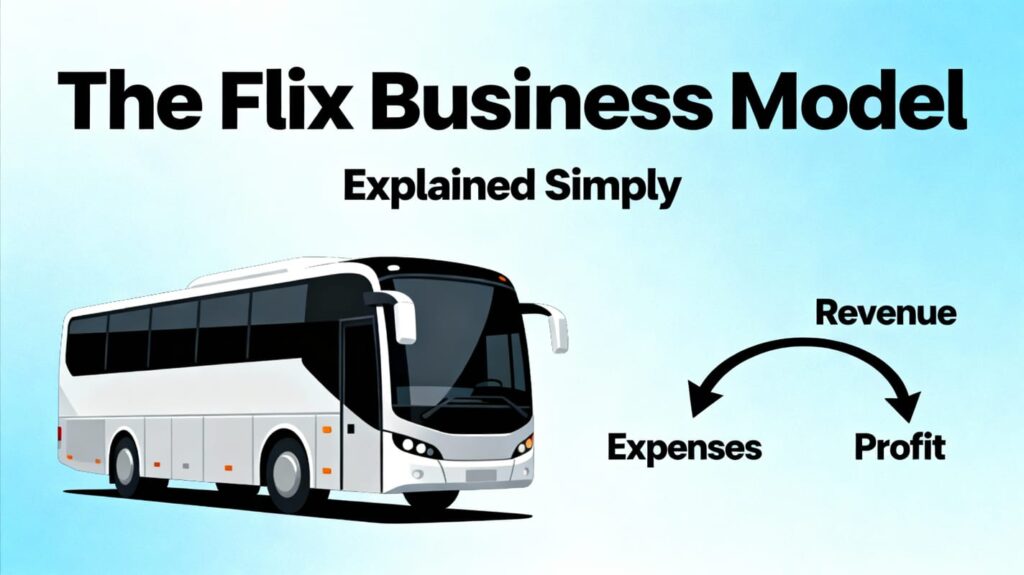
Asset-Light Strategy
Unlike traditional bus or train companies, Flix doesn’t own a massive fleet.
Instead:
- Local partners operate vehicles
- Flix handles innovation, tech, and branding
This reduces costs and scales faster — a genius strategy!
Partnership Ecosystem
By collaborating with regional operators:
- They support local businesses
- Expand faster than competitors
- Strengthen service quality nationwide
Tech-Driven Company
Flix isn’t a transport company — it’s a technology company that sells travel.
Disruption through Digitalization
Mobile-First Bookings

Everything is digital:
✔ One-tap booking
✔ M-tickets — no printing
✔ Live route updates
Real-Time Tracking
Customers can track buses and trains like:
“Where is my ride? Oh, 3 minutes away!”
Dynamic Pricing Strategy
Similar to airlines — prices adjust with:
- Demand
- Season
- Booking timing
This keeps prices super-competitive.
The Power of the Brand
Let’s be real — you’ve probably seen a big green FlixBus rolling by somewhere.
Their branding stands out:
- Bright green = eye-catching + eco messaging
- Friendly tone in communication
- Youth-first marketing
They turned bus travel from boring and outdated to cool and modern.
Flix Marketing Playbook
Guerrilla Marketing

Flix loves creative attention-grabbing campaigns:
- Stickers
- Flash sales
- Public activations
Low budget but huge impact!
Student Ambassador Programs
Young people travel the most — smart targeting!
Social Media Mastery
Content that’s:
- Fun
- Relatable
- Share-worthy
Flix turned customers into brand promoters.
Personalized Offers & Retargeting
Right message, right moment = more bookings.
Latestb Post:




Expanding the Ecosystem: FlixTrain D
After buses dominated, Flix targeted the rail sector with FlixTrain D.
Why?
- Less competition
- Better market potential
- High demand routes
Suddenly, travelers got:
✔ Cheaper train tickets
✔ Modern onboard experience
✔ Alternatives to national operators like Deutsche Bahn
Competition = better prices for everyone!
Sustainability as a Selling Point
Flix positioned itself as a green mobility leader.
- Lower emissions per passenger
- Carbon offset options
- EV bus pilot projects
- Trains powered by renewable electricity (in selected routes)
They proved that affordable and sustainable can go hand in hand.
Smart Use of Data & AI
Flix analyzes:
- Route performance
- Demand spikes
- Travel behavior patterns
This improves:
✔ Scheduling
✔ Fleet efficiency
✔ Ticket pricing
Data = their secret weapon.
Challenges & Criticisms
Of course, it’s not all roses.
Some concerns include:
- Service quality variations (due to operators)
- Regulatory battles in multiple countries
- Price wars pressuring competitors
Still, Flix adapts quickly — that’s innovation at work.
Global Expansion Strategy
Flix went beyond Europe:
- USA: Took over Greyhound 🚍
- Turkey & Southeast Europe: Growing rapidly
- Eyeing even more continents
Their plan?
Be the #1 global mobility brand.
Comparing FlixBus vs. Traditional Transport Operators
| Feature | FlixBus | Traditional Operators |
| Fleet Ownership | ❌ No | ✔ Yes |
| Pricing | Low & dynamic | Fixed & costly |
| Tech & App | Strong | Often outdated |
| Speed of Expansion | Very fast | Slow |
Clear winner: Innovation beats tradition.
Future of Flix Mobility
The road ahead includes:
- Autonomous buses 🤖
- More international train networks
- Seamless multi-modal travel (bus + train + e-mobility)
- Smart-city transportation integration
Flix might become the Google of mobility!
Also visit:
Secret Treasures: Discovering Hidden Gems in Italy
Hidden Gems in Italy: Exploring Beyond the Tourist Trail
Hidden Gems in Italy That Will Take Your Breath Away
The Best Beaches in Florida for Nightlife and Entertainment
The Best Beaches in Florida for Beach Volleyball
Conclusion
FlixBus & FlixTrain D didn’t simply join the transportation industry — they reinvented it. Through:
- Bold branding
- Tech-first strategy
- Eco-friendly mindset
- Affordable pricing
They turned the mundane idea of bus travel into a global mobility revolution.
And they’re just getting started.