

Discover how Explorer Travel Insurance helps protect travelers from unexpected medical emergencies, trip cancellations, lost baggage, and travel delays. Learn about its key benefits, coverage options, and tips for choosing the right travel insurance to enjoy a safer and more worry-free journey around the world.
Table of Contents
- What Is Explorer Travel Insurance?
- Why Is Travel Insurance Important?
- How Does Travel Insurance Work During an International Trip?
- Travel Insurance for Adventure and Outdoor Activities
- Types of Travel Insurance Plans
- Key Features of Explorer Travel Insurance
- Travel Insurance for Families and Group Travelers
- Importance of Emergency Medical Evacuation Coverage
- Who Should Consider Travel Insurance?
- What Does Travel Insurance Usually Cover?
- What Is Not Covered by Travel Insurance?
- Benefits of Choosing Travel Insurance
- How to Choose the Right Travel Insurance
- Tips for Making a Travel Insurance Claim
- Is Travel Insurance Worth the Cost?
- Pros and Cons of Travel Insurance
- Conclusion
- Frequently Asked Questions
What Is Explorer Travel Insurance?
Explorer Travel Insurance refers to travel protection designed to help travelers manage unexpected problems during their journeys. It can provide financial support for medical emergencies, flight delays, lost luggage, trip cancellations, and other covered travel-related situations. Whether you are visiting another country for a holiday, business, or adventure, having suitable insurance can make your journey more secure.
Travel insurance plans differ between providers, so it is important to understand what each policy offers. Some plans focus mainly on medical expenses, while others provide wider protection for travel disruptions and personal belongings. Choosing a suitable plan before departure can help you avoid unnecessary financial stress.
Why Is Travel Insurance Important?
Traveling brings exciting experiences, but unexpected situations can happen at any time. You might become ill, miss a connecting flight, lose your passport, or experience baggage delays. Without insurance, you may have to manage these expenses yourself, which can be difficult in an unfamiliar country.
Medical treatment abroad can be particularly expensive. The Centers for Disease Control and Prevention recommends that international travelers consider travel health and medical evacuation insurance when their existing coverage is insufficient.
Travel insurance also offers assistance when your plans change unexpectedly. Depending on your policy, you may receive reimbursement for eligible non-refundable travel expenses. This makes it easier to handle unexpected situations without putting your entire travel budget at risk.
How Does Travel Insurance Work During an International Trip?
Travel insurance provides financial protection when unexpected situations occur during an international journey. After purchasing a policy, travelers receive documents explaining their coverage, benefits, and claim procedures. If an insured event happens, they can contact the insurance provider and follow the required steps to request assistance or reimbursement.
For example, if you experience a medical emergency while visiting another country, your policy may cover eligible hospital expenses. Similarly, if your luggage goes missing during a flight, you may receive compensation depending on your coverage limits. Understanding how your policy works before departure can help you handle emergencies more confidently.
Travel Insurance for Adventure and Outdoor Activities
Adventure travel is becoming popular among people who enjoy trekking, hiking, skiing, scuba diving, and other outdoor activities. However, these experiences can involve additional risks, especially when visiting remote locations or participating in physically demanding activities.
Standard travel insurance may not cover every adventure activity. Some insurance providers offer additional coverage for selected sports and outdoor experiences. Before booking your adventure, check whether your policy includes medical treatment, emergency evacuation, equipment protection, and accident-related benefits.
Types of Travel Insurance Plans
There are different types of travel insurance plans available in the market. Each is designed to protect travelers against particular risks.
| Insurance Type | Main Purpose |
| Single-trip insurance | Covers one specific journey |
| Multi-trip insurance | Covers multiple trips within a policy period |
| International travel insurance | Provides protection for overseas journeys |
| Domestic travel insurance | Covers eligible travel within your country |
| Family travel insurance | Covers multiple eligible family members |
| Student travel insurance | Designed for students studying abroad |
| Adventure travel insurance | Provides coverage for selected adventure activities |
Before choosing a plan, compare the coverage limits, exclusions, duration, and premium costs.
Key Features of Explorer Travel Insurance
Travel insurance policies offer different features depending on the provider and selected coverage. Understanding these features can help you decide which protection is most useful for your trip.
Emergency Medical Expenses
Medical emergencies are among the most important reasons to consider travel insurance. If you become sick or injured during your journey, an appropriate policy may cover eligible hospital bills, medical consultations, medicines, and emergency treatment.
Some policies also include emergency medical transportation or evacuation. This can be especially helpful when visiting remote destinations where suitable medical facilities are difficult to access.
Trip Cancellation and Interruption
Sometimes, unexpected circumstances force travelers to cancel or shorten their trips. Illness, serious family emergencies, or certain unexpected events may affect travel plans.
Depending on the policy conditions, trip cancellation and interruption coverage can reimburse eligible prepaid and non-refundable expenses. Always check the approved reasons for cancellation before purchasing a plan.

Lost Baggage and Personal Belongings
Losing your luggage can create problems during a holiday. Important items such as clothing, travel documents, electronic devices, and personal belongings may be delayed, damaged, or stolen.
Travel insurance may provide compensation for eligible baggage loss or delays. However, coverage limits and documentation requirements vary between insurance providers.
Travel Insurance for Families and Group Travelers
Traveling with family or friends is a wonderful way to create unforgettable memories. However, managing unexpected situations can become difficult when several people are traveling together. Family and group travel insurance plans can provide protection for multiple eligible travelers under one policy, depending on the provider’s terms.
These plans may include medical emergency coverage, baggage protection, trip cancellation benefits, and travel assistance. Families traveling with children should pay particular attention to medical coverage and emergency support. Before purchasing a policy, check the age limits, individual coverage limits, and whether every family member is included.
Importance of Emergency Medical Evacuation Coverage
Medical emergencies can become more complicated when travelers visit remote destinations or countries with limited healthcare facilities. In serious situations, a patient may need transportation to another hospital or medical facility for appropriate treatment.
Emergency medical evacuation coverage can help pay eligible transportation expenses when medically necessary. Depending on the policy, it may include ambulance services, air transportation, and arrangements to reach suitable medical facilities.
This coverage is particularly useful for adventure travelers, hikers, and people visiting isolated locations. Always check the maximum benefit amount and approval requirements before purchasing insurance.
Who Should Consider Travel Insurance?
Travel insurance can be useful for almost every type of traveler. However, it is particularly important for people visiting international destinations, planning expensive holidays, or participating in outdoor activities.
Families traveling with children may benefit from medical and baggage protection. Older travelers may want to look for plans that clearly address age limits and pre-existing medical conditions.
Adventure travelers should also pay attention to activity-related coverage. Activities such as skiing, scuba diving, trekking, and mountain climbing may require additional protection or specialist policies.
Business travelers can consider coverage for unexpected cancellations, medical emergencies, and travel delays. Selecting the right policy depends on your destination, travel duration, budget, and personal requirements.
What Does Travel Insurance Usually Cover?
Most comprehensive travel insurance policies include several types of protection, although the exact benefits depend on the insurer.
Common coverage areas include:
- Emergency medical treatment and hospitalization.
- Trip cancellation and interruption.
- Flight delays and missed connections.
- Lost, stolen, or delayed baggage.
- Passport and travel document assistance.
- Emergency medical evacuation.
- Personal accident benefits.
Some policies also provide coverage for hotel expenses during qualifying delays or emergency accommodation arrangements. Read the policy wording carefully to understand the conditions and maximum compensation available.
What Is Not Covered by Travel Insurance?
Travel insurance does not cover every unexpected situation. Most policies include exclusions that explain when an insurance company can reject a claim.
Common exclusions may include:
- Undeclared pre-existing medical conditions.
- Injuries caused by illegal activities.
- Certain high-risk sports without additional coverage.
- Losses involving unattended personal belongings.
- Travel to destinations affected by specific official warnings.
- Certain war-related or political events.
- Claims involving alcohol or prohibited substances.
These exclusions differ between insurers. For example, some companies offer additional protection for adventure sports or selected pre-existing conditions, while basic plans may exclude them.
Benefits of Choosing Travel Insurance
Travel insurance offers several advantages for people exploring different destinations. Its biggest benefit is financial protection when unexpected events affect a journey. Instead of paying every eligible emergency expense yourself, you may receive support according to your policy.
Another advantage is access to emergency assistance services. Some providers offer 24-hour support to help travelers locate medical facilities, understand claim procedures, or arrange emergency transportation.
Here are some common benefits:
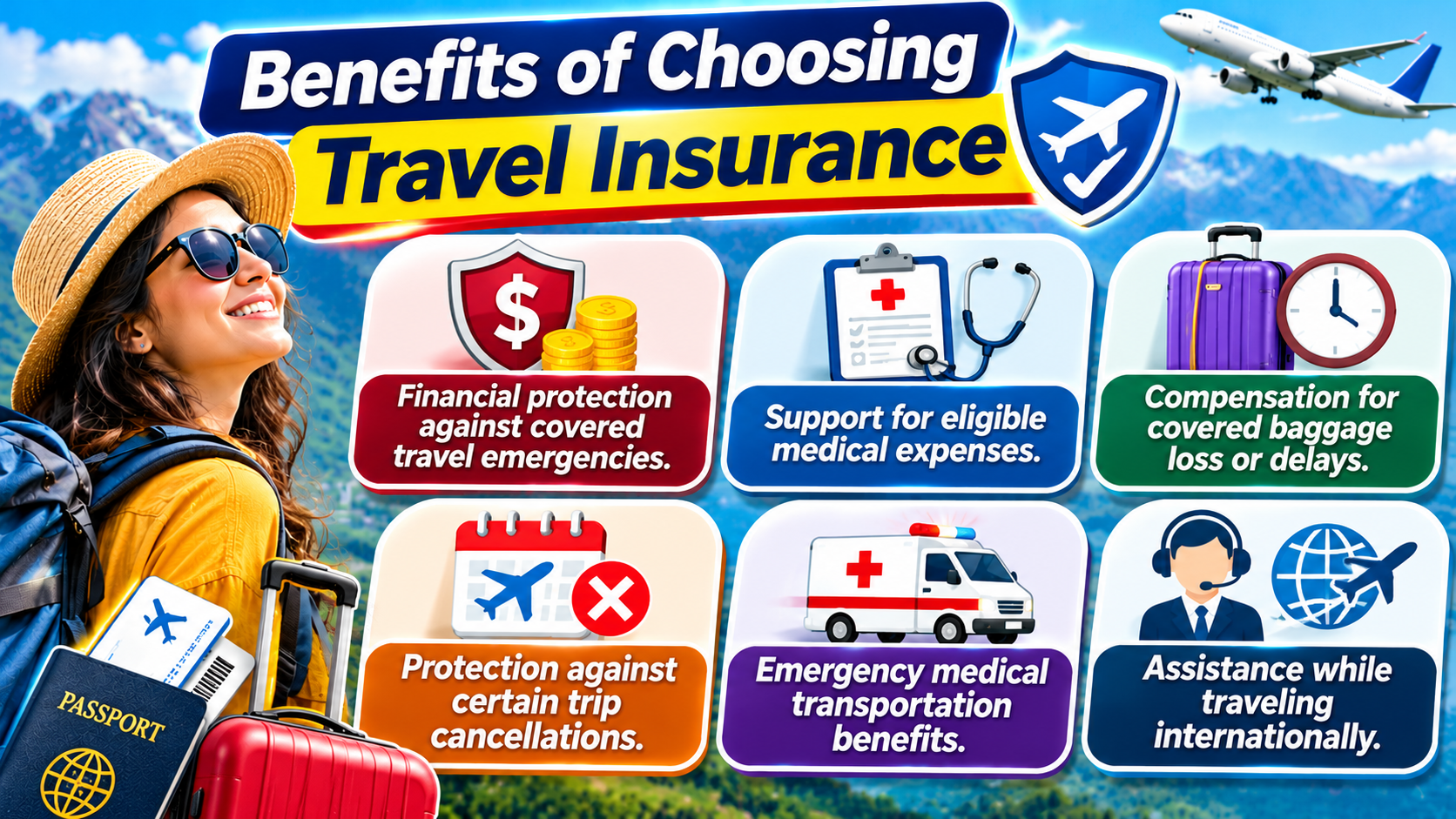
- Financial protection against covered travel emergencies.
- Support for eligible medical expenses.
- Compensation for covered baggage loss or delays.
- Protection against certain trip cancellations.
- Emergency medical transportation benefits.
- Assistance while traveling internationally.
These benefits can make travel planning more comfortable and help you focus on enjoying your destination.
How to Choose the Right Travel Insurance
Choosing travel insurance should not be based only on the cheapest premium. A low-cost policy may provide limited medical coverage or exclude activities you are planning to enjoy.
Start by checking the destination and duration of your trip. Make sure the policy covers every country you intend to visit and remains valid throughout your journey. Next, compare medical coverage, emergency evacuation limits, baggage protection, and cancellation benefits.
You should also review the claim process and customer assistance services. A provider with 24-hour emergency support can be helpful when you need assistance in another time zone.
For Indian travelers, checking the latest travel guidance from the Ministry of External Affairs is also a useful preparation step.
Tips for Making a Travel Insurance Claim
Making a successful insurance claim requires proper documentation and following the insurer’s instructions. If an unexpected incident occurs, contact your insurance provider as soon as possible.
Keep important documents such as medical reports, hospital bills, flight tickets, baggage receipts, and police reports where applicable. These records can help support your claim.
Follow these simple steps:
- Contact your insurance provider and report the incident.
- Ask about the required claim documents.
- Collect receipts and supporting evidence.
- Complete the claim form accurately.
- Submit all documents within the specified deadline.
- Keep a copy of your claim reference and submitted records.
Remember that claim approval depends on your policy terms, exclusions, and supporting documents.
Also Read:
Fitnessraum DE: Fitness Solutions for Frequent Travelers
Go Groopie: Affordable Short Breaks Explained
Oasis Hotels (US): Affordable Luxury for Modern Travelers
Desire Experience (US): What Travelers Should Expect Before Booking
How to Discover Fashion and Lifestyle Products on Apposta
Is Travel Insurance Worth the Cost?
Travel insurance can be worth considering, particularly when you have invested a significant amount in your holiday or are visiting a destination with expensive healthcare services.
The premium depends on several factors, including your age, destination, trip duration, coverage amount, and selected benefits. A more comprehensive policy may cost more but can provide wider protection.
Think about the possible financial impact of an unexpected emergency. Paying a reasonable premium before traveling may help reduce the financial burden of certain covered incidents later.
However, compare different policies rather than purchasing the first option you find. The best choice is one that provides suitable coverage within your travel budget.
Pros and Cons of Travel Insurance
Travel insurance has several advantages, but there are also limitations worth understanding before purchasing a policy.
| Pros | Cons |
| Financial protection against covered emergencies | Additional travel expense |
| Medical assistance during eligible emergencies | Some conditions are excluded |
| Protection against certain trip cancellations | Claim procedures can take time |
| Baggage loss and delay benefits | Compensation limits may apply |
| Emergency assistance services | Adventure activities may need extra coverage |
Overall, travel insurance can provide valuable protection, but travelers should understand the policy conditions before making a decision.
Latest Posts:




Conclusion
Exploring the world is an exciting experience, but unexpected situations can sometimes create difficulties. Explorer Travel Insurance can help travelers manage eligible medical emergencies, baggage problems, flight delays, and trip cancellations.
Before selecting a policy, compare different providers, understand the coverage limits, and check the exclusions. Make sure your insurance matches your destination, travel duration, and planned activities.
The right travel insurance does not prevent every travel problem, but it can make unexpected situations easier to manage. With proper preparation and suitable protection, you can enjoy your journey with greater confidence.