
Discover how CHANGE DE LA BOURSE FR can help you understand currency exchange in France. Learn about exchange rates, fees, safe money-changing practices, and tips for getting better value when converting your money into euros.
Table of Contents
- Introduction to Currency Exchange in France
- What Is Change de la Bourse?
- How Currency Exchange Works in France
- Where to Exchange Money Safely in France
- Tips for Getting Better Exchange Rates
- Key Features of CHANGE DE LA BOURSE FR
- Best Time to Exchange Money in France
- How to Choose a Reliable Currency Exchange Provider
- Currency Exchange for International Tourists
- How to Calculate Currency Exchange Costs
- Safety Tips for Carrying Euros in France
- Understanding Currency Exchange Rates in France
- Currency Exchange for Business Travelers
- Exchanging Leftover Euros After Your Trip
- Also Read:
- Benefits and Drawbacks of Currency Exchange Offices
- Common Currency Exchange Scams to Avoid
- Cash, Cards, and Digital Payments in France
- Documents and Rules for Currency Exchange
- Conclusion
- Frequently Asked Questions
Introduction to Currency Exchange in France
Planning a trip to France, studying abroad, or visiting Paris for business? Understanding how to exchange money safely can help you avoid unnecessary fees and protect your travel budget. France uses the euro (€), so visitors carrying US dollars, British pounds, Indian rupees, or other foreign currencies may need to exchange their money before making purchases.
Change de la Bourse FR is a search term associated with currency exchange in France. If you are considering a particular exchange office with this name, verify its address, operating details, and exchange conditions before visiting. Choosing a reliable provider and comparing rates can make the process easier.
According to France’s official public information service, travelers can use cash, bank cards, and other payment methods, depending on their needs.
The ideal choice hinges on the fees charged by your bank, the sum you intend to exchange, and which currencies are involved.
What Is Change de la Bourse?
The French expression change de la bourse can relate to currency exchange and money-changing services. A currency exchange office allows customers to exchange one currency for another, usually by buying or selling banknotes at an advertised rate.
For example, a traveler arriving in France with US dollars may exchange some of those dollars for euros. The amount received depends on the provider’s rate and any applicable commission or service charge.
Before choosing a service associated with the name Change de la Bourse FR, confirm that you have identified the correct business. Check its official website, physical address, customer reviews, and published rates where available. Do not assume that a website or business is trustworthy based on its name alone.
A legitimate exchange provider should explain the transaction clearly, tell you how many euros you will receive, and provide a receipt. These simple checks help you make a more informed decision.
How Currency Exchange Works in France
Currency exchange is straightforward once you understand the basic process. You provide the currency you want to sell, the exchange provider calculates its value using the applicable rate, and you receive the equivalent amount in another currency after any relevant charges.
For example, imagine you want to exchange $200 into euros. If the provider offers an illustrative rate of €0.85 per US dollar, the calculation would be:
- Amount exchanged: $200
- Illustrative exchange rate: €0.85 per dollar
- Amount before fees: €170
If the provider charges a €5 fee, you would receive €165. This is only an example, not a current market rate or a quoted rate from Change de la Bourse FR.
Understanding Exchange Rates and Fees
Exchange rates change with market conditions, and the rate offered by an exchange office may differ from the reference rate published by a central bank. Providers can also include their costs in the rate or charge a separate commission.
French regulations require currency exchange businesses covered by the applicable rules to display relevant rates and charges and inform customers of the net exchange rate before a transaction.
Always ask one important question before handing over your money: How much will I receive after all fees? This makes it easier to compare providers and avoid unexpected costs.
Where to Exchange Money Safely in France
France offers several ways to obtain euros. Your choice should depend on convenience, exchange costs, and the amount of cash you need.
Currency exchange offices: These businesses can exchange foreign banknotes for euros, often immediately. Check the rates and fees shown before you agree to any transaction.
Banks: Your bank or a French bank may offer foreign currency services, although availability depends on the institution and currency. Certain currencies might have to be ordered ahead of time. The Banque de France explains that it does not directly exchange foreign currency for individuals.
ATMs: Withdrawing euros using an international bank card may be convenient. That said, your bank or the ATM operator could apply fees, so review the terms before you confirm a withdrawal.
Airports and tourist areas: Exchange offices in busy locations can save time, but convenience does not guarantee a competitive rate. Compare alternatives whenever possible.
Tips for Getting Better Exchange Rates
Getting a good exchange rate does not require advanced financial knowledge. You simply need to compare the total cost of different options before making a decision.
Start by checking a reliable reference rate for your currency. Then ask the exchange office for its final rate and the exact amount you will receive. Compare at least two providers when practical, particularly if you plan to exchange a large amount.
Consider these useful tips:
- Compare the final amount: Do not focus only on advertisements claiming zero commission.
- Check the fees: A provider may include its profit in the exchange rate rather than charge a separate fee.
- Avoid rushing: Airport counters and tourist locations may be convenient, but compare their offers with other available options.
- Exchange only what you need: This reduces the risk of carrying too much cash or paying additional fees when converting leftover money.
- Keep your receipt: It provides a record of the rate, amount, and transaction details.
A small difference in the exchange rate can affect the total amount you receive. For this reason, comparing the final figures is more useful than choosing the first office you see.
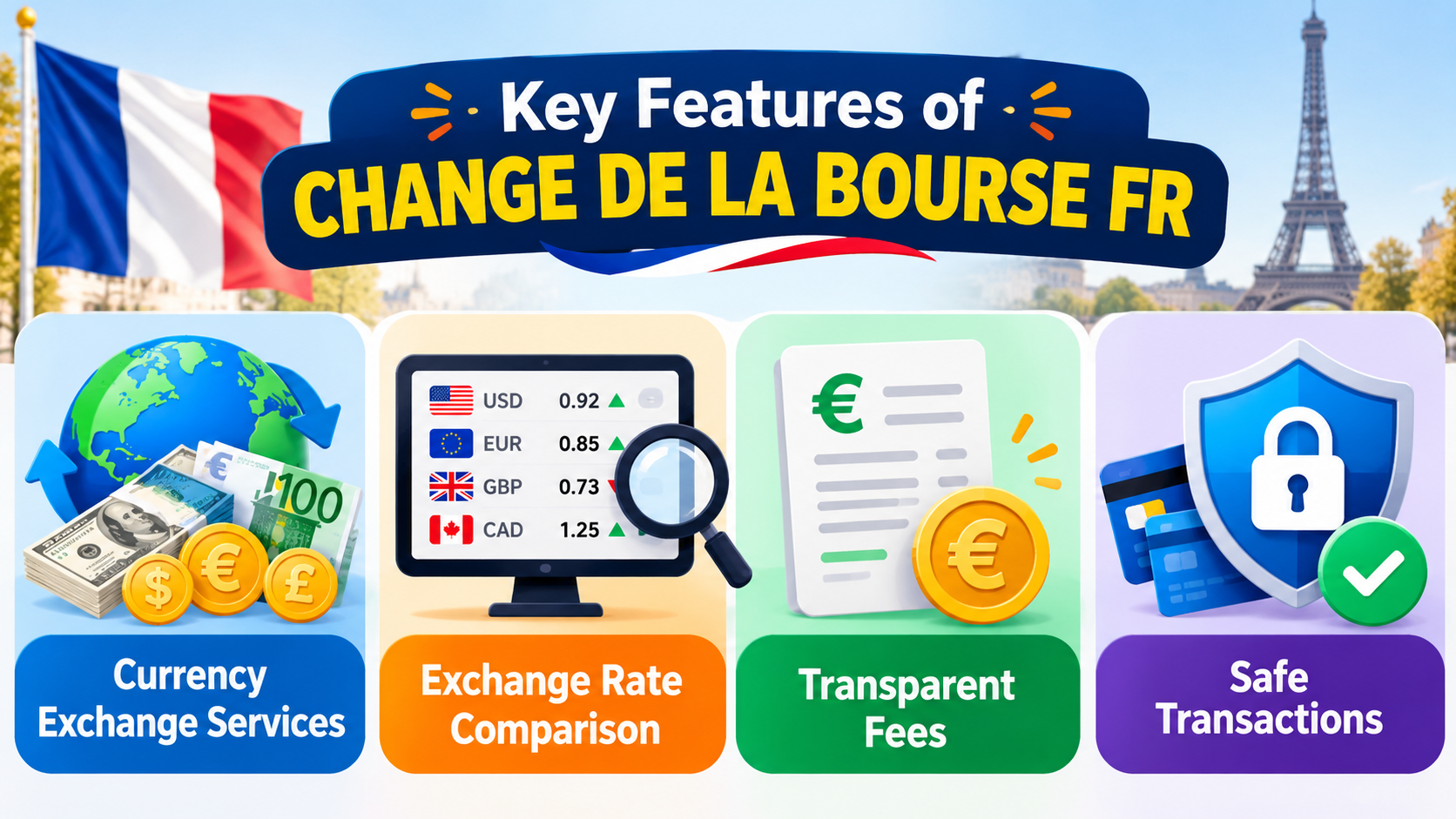
Key Features of CHANGE DE LA BOURSE FR
- Currency Exchange Services: Helps travelers understand how to exchange foreign currencies into euros in France.
- Exchange Rate Comparison: Encourages users to compare rates and choose a suitable exchange option.
- Transparent Fees: Highlights the importance of checking commissions and hidden charges before exchanging money.
- Safe Transactions: Promotes secure money exchange practices and choosing trustworthy providers.
Best Time to Exchange Money in France
Choosing the right time to exchange money can help you manage your travel budget. Currency exchange rates change regularly due to market conditions, economic news, and demand for different currencies. Before exchanging your money, check the latest reference rate and compare the offers available from different providers. Avoid making a rushed decision at the airport or a busy tourist location without checking other options. If you need euros for your trip, planning ahead can make the process easier and help you avoid unnecessary costs.
How to Choose a Reliable Currency Exchange Provider
Choosing a trustworthy currency exchange provider is important when handling foreign money. Look for a business that clearly displays its exchange rates, explains its fees, and provides a receipt for every transaction. Check its address, contact details, and recent customer reviews before visiting. You should also confirm that the provider accepts your currency and ask how much you will receive after all charges. When researching CHANGE DE LA BOURSE FR, verify the exact business identity and its current services rather than relying only on its name.
Currency Exchange for International Tourists
International tourists visiting France may need euros for transportation, shopping, dining, and other everyday expenses. Before traveling, check whether your bank card works internationally and whether foreign transaction fees apply. It can be useful to carry a small amount of cash for situations where card payments are unavailable. You can obtain euros through a currency exchange office or an ATM, depending on availability and cost. Comparing these options helps you choose a convenient way to manage your travel money.
How to Calculate Currency Exchange Costs
Understanding exchange calculations helps you know exactly how much money you will receive. Multiply the amount you want to exchange by the provider’s quoted rate, then subtract any applicable fees. For example, if you exchange $300 at an illustrative rate of €0.86 per dollar, you would receive €258 before fees. If the transaction includes a €6 charge, the final amount would be €252. These figures are examples only; actual rates and fees vary by provider and transaction.
Safety Tips for Carrying Euros in France
After exchanging money, keep your cash secure while exploring France. Avoid displaying large amounts of money in public, and divide your cash between secure locations rather than keeping everything in one wallet. Use a secure bag and remain aware of your surroundings in crowded tourist areas and on public transport. Keep a record of your bank’s contact information in case your card is lost or stolen. Carrying only the cash you need for the day can reduce the risk of losing a large amount of money.
Understanding Currency Exchange Rates in France
Currency exchange rates determine how much foreign currency you receive when converting your money into euros. These rates can change throughout the day because of market activity, economic conditions, and international demand. The rate shown by a currency converter may differ from the rate offered by an exchange office because providers include operating costs and profit margins. Before exchanging money, compare the available rates and ask about additional charges. Understanding these differences helps you make informed decisions and manage your travel expenses more effectively.
Currency Exchange for Business Travelers
Business travelers visiting France may need euros for local transportation, meals, meetings, and other professional expenses. Planning currency needs before departure can reduce last-minute decisions and help keep spending under control. International business travelers should check their company’s reimbursement policies and retain receipts for currency exchanges and other expenses. Bank cards may be suitable for larger payments, while cash can be useful for smaller purchases. Choosing the right combination of payment methods can make business travel more convenient.
Exchanging Leftover Euros After Your Trip
After returning home from France, you may have unused euros in your wallet. Depending on your plans, you can keep them for a future trip, exchange them into your home currency, or ask your bank about its foreign banknote services. Before converting the money, compare the exchange rate and any fees involved. Exchanging a small amount may be less economical if the provider charges a fixed commission. Keeping leftover euros can be a practical option if you expect to visit France or another euro-using destination again.
Also Read:
Hotelopia (Global): A Complete Guide to Worldwide Hotel Deals
Why Bark UK Is a Favorite Brand for Pet Travelers
Why Anantara Resorts (Global) Are a Top Choice for Luxury Travelers
Explorer Fernreisen DE: A Complete Travel Guide for Global Explorers
How Ordnance Survey Helps You Plan Safer and Smarter Adventures
Benefits and Drawbacks of Currency Exchange Offices
Currency exchange offices can be a practical choice when you need euros quickly or prefer to exchange physical banknotes rather than use a bank card. They are particularly useful for travelers who want to arrive with spending money or need to convert cash they already possess.
However, rates and charges differ between providers. An office in a busy tourist area may prioritize convenience, while another provider may offer a better overall deal. Some currencies may also be unavailable, and you may need identification for particular transactions.
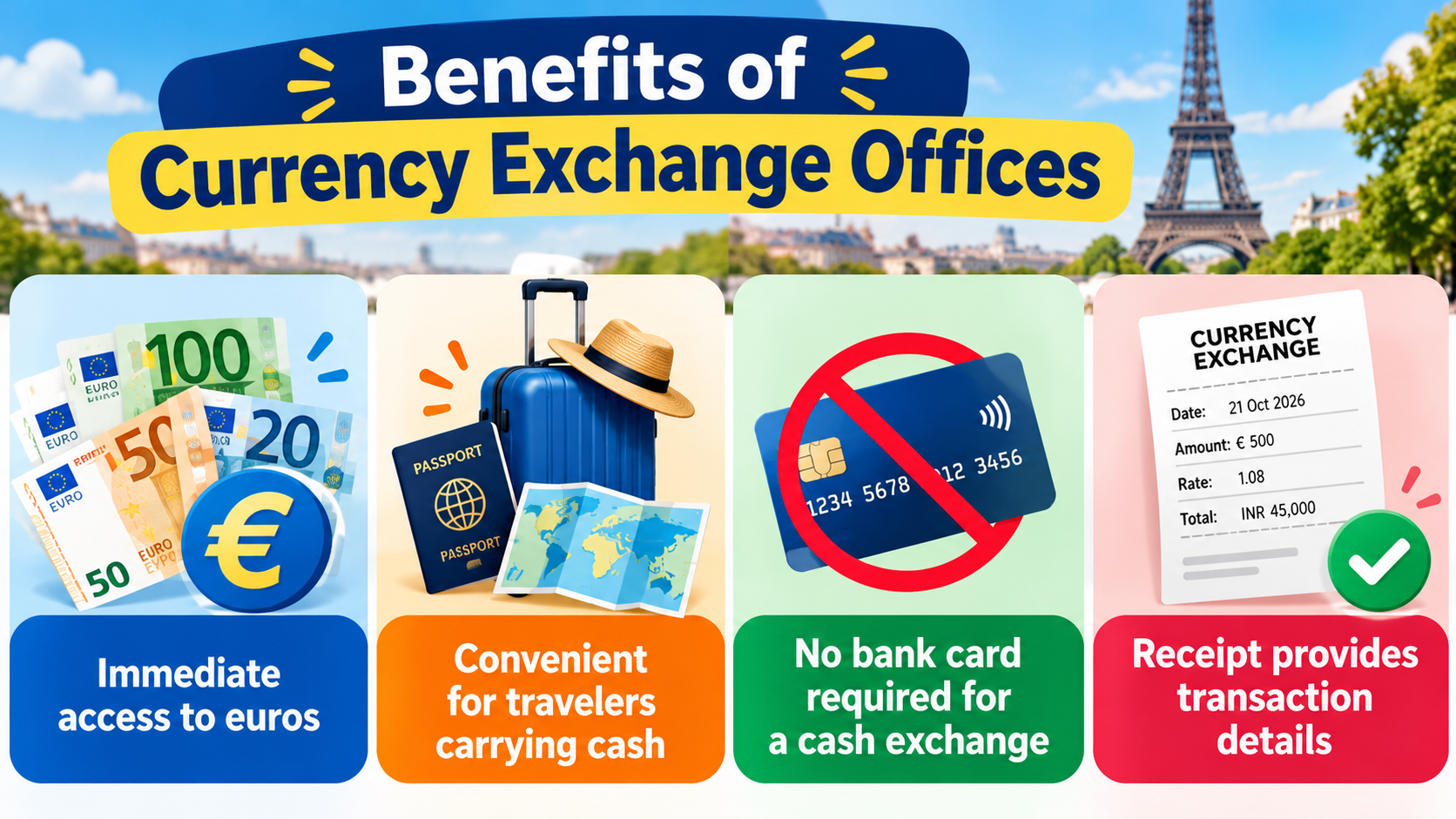
| Benefits | Drawbacks |
| Immediate access to euros | Exchange rates vary |
| Convenient for travelers carrying cash | Fees may reduce the amount received |
| No bank card required for a cash exchange | Not every currency is available |
| Receipt provides transaction details | Carrying large amounts of cash creates security risks |
The best approach is to compare exchange offices with your bank card or ATM options before deciding. If you are considering Change de la Bourse FR specifically, verify the business’s identity and actual terms rather than relying on its name or a promotional offer.
Common Currency Exchange Scams to Avoid
Most currency exchanges are ordinary financial transactions, but travelers should still be alert to misleading offers and dishonest operators. A little caution can help protect your money.
Be careful with offers that promise unusually favorable rates without explaining the conditions. Some advertisements emphasize zero commission while offering a less competitive exchange rate. Others may display rates that apply only to particular transaction sizes or payment methods.
Before proceeding, confirm the rate, fees, and amount you will receive. Count your money at the counter before leaving, check the banknotes, and make sure the receipt matches the transaction.
Avoid exchanging money with strangers on the street or sending funds to an unknown person who claims to represent an exchange company. Never share your banking password, PIN, or one-time security code with an exchange agent.
If a transaction feels unclear or the provider refuses to explain its charges, choose another service. A trustworthy exchange should offer clear terms, transparent pricing, and a proper transaction record.
Cash, Cards, and Digital Payments in France
You do not need to carry all your travel money in cash when visiting France. Bank cards and digital payments are useful for hotels, restaurants, shops, and transport services that accept them. Keeping a small amount of euros can still help when you need cash for smaller purchases or places with limited payment options.
| Payment method | Main advantage | What to consider |
| Cash in euros | Useful for small purchases | Keep it secure |
| International debit card | Convenient for everyday spending | Check foreign transaction fees |
| Credit card | Useful for larger purchases and reservations | Understand interest and cash-advance charges |
| Mobile wallet | Convenient contactless payments | Ensure your device and card are supported |
| ATM withdrawal | Provides local currency when needed | Check withdrawal and conversion fees |
France’s official guidance recommends checking your bank’s international payment limits and charges before traveling.
Latest Posts:




Documents and Rules for Currency Exchange
For a routine exchange, the provider may ask for identification depending on the transaction amount, applicable regulations, and its internal procedures. Carry a valid passport or another accepted identity document when traveling, and check the provider’s requirements before visiting.
Keep your exchange receipt, especially when changing a large amount or planning to convert leftover euros later. If you exchange money for a business trip, you may also need the receipt for expense records.
Travelers should understand France’s cash declaration rules as well. Under French customs guidance, carrying cash and certain other monetary instruments totaling €10,000 or more, or the equivalent in foreign currency, when entering or leaving France can trigger a declaration requirement. The rules apply to qualifying movements of funds across borders, and travelers should check the applicable procedures before departure.
Conclusion
Exchanging money safely in France starts with choosing a reliable provider, checking the exchange rate, and understanding all applicable charges. Whether you use a service associated with Change de la Bourse FR, a bank, or an ATM, focus on the final amount you receive rather than the advertised rate alone.
Carry only the cash you need, use secure payment methods, keep your receipts, and check official guidance when exchanging large amounts or crossing borders. A few simple precautions can help you manage your travel budget with greater confidence and enjoy your time in France without unnecessary financial stress.