

Discover how Pipedrive helps growing teams streamline their sales process, manage leads efficiently, and boost productivity. This article explores the key features of Pipedrive CRM and how it supports businesses in organizing pipelines, tracking deals, and improving overall sales management.
Table of Contents
- Understanding CRM and Why Sales Teams Need It
- The Evolution of CRM in Modern Sales
- Common Challenges Sales Teams Face Without a CRM
- What Is Pipedrive CRM?
- The Story Behind Pipedrive
- Who Uses Pipedrive Today
- Key Features of Pipedrive CRM
- Pipedrive Pricing Plans Explained
- Integrations and Ecosystem
- Benefits of Using Pipedrive for Growing Teams
- Potential Limitations of Pipedrive
- Pipedrive vs Other CRM Platforms
- How to Implement Pipedrive Successfully
- Conclusion
- FAQs
Understanding CRM and Why Sales Teams Need It
Customer Relationship Management systems—often shortened to CRM—have become the backbone of modern sales operations. Imagine trying to run a fast-growing sales team using only spreadsheets, scattered emails, and sticky notes. At first it might seem manageable. But as your business grows and your customer base expands, that chaotic system begins to break down quickly. This is where tools like Pipedrive CRM come into play.
A CRM is essentially a centralized platform designed to manage interactions with leads, prospects, and customers. It organizes sales pipelines, stores communication history, tracks deals, and provides insights into sales performance. Instead of juggling multiple tools or manually updating spreadsheets, everything lives in one place. Sales reps know exactly where every deal stands and what action needs to happen next.
For growing businesses, this level of organization is critical. According to industry reports, companies that actively use CRM software can significantly improve their sales productivity and customer retention. Sales managers gain visibility into team performance, while representatives spend less time on administrative tasks and more time actually selling.
CRM platforms also help standardize the sales process. Without structure, every salesperson might follow a different workflow, making it difficult to forecast revenue or analyze performance. With a CRM like Pipedrive, teams follow consistent pipelines, stages, and activities, which makes forecasting much more accurate.
In simple terms, CRM tools act like the operating system for your sales team. They turn scattered customer information into actionable insights, helping businesses build stronger relationships, close deals faster, and scale operations efficiently.
The Evolution of CRM in Modern Sales
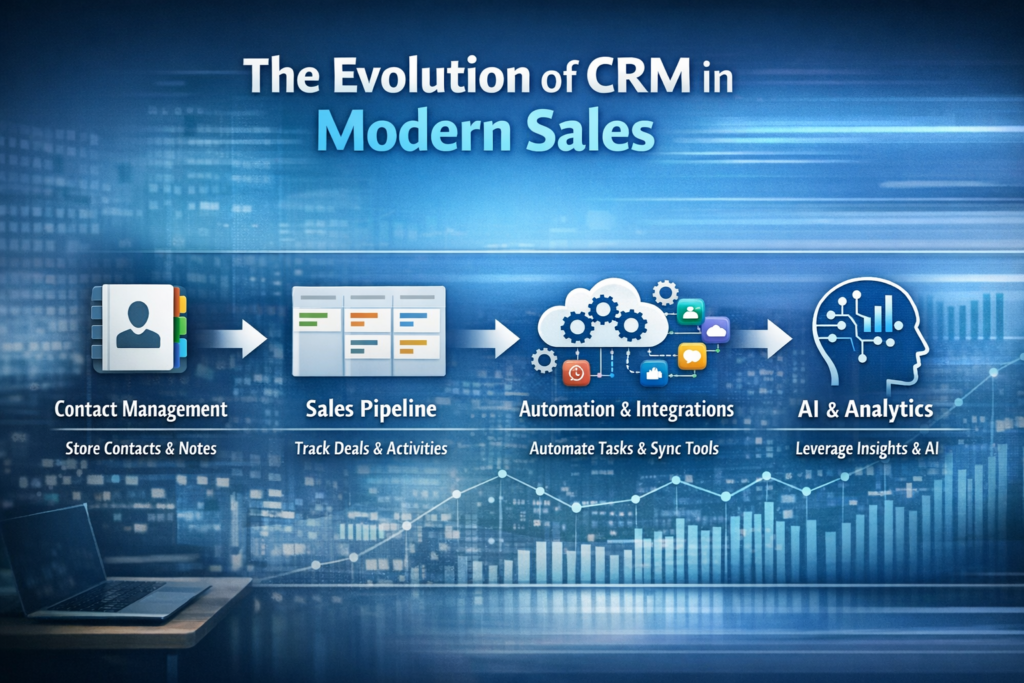
CRM systems have evolved dramatically over the past two decades. Early CRM tools were complex, expensive, and designed mainly for large enterprises with dedicated IT departments. Small and medium-sized businesses often avoided them because they were difficult to implement and maintain.
Today’s CRM solutions are very different. Modern platforms focus on usability, automation, and integration with other business tools. Instead of requiring months of training, many CRM platforms can be learned within days. Cloud technology has also made CRM systems more accessible, allowing teams to access their sales data from anywhere.
One of the biggest shifts in CRM design is the focus on visual sales pipelines. Traditional CRM systems buried data inside complicated dashboards and reports. Modern tools like Pipedrive CRM prioritize visual deal tracking, making it easy for sales reps to see their entire pipeline at a glance.
Another major change is automation. Sales teams no longer need to manually track every follow-up email or reminder. Automated workflows can send emails, schedule meetings, assign tasks, and update deal stages automatically. This reduces repetitive work and helps teams stay focused on building relationships with prospects.
AI and predictive analytics are also shaping the next generation of CRM software. Some CRM platforms now offer AI-powered insights that analyze deal data and recommend the best next steps for closing sales. These technologies transform CRM systems from simple databases into intelligent sales assistants.
As sales processes continue to evolve, CRM platforms must keep up with the needs of modern teams. That’s why tools like Pipedrive focus heavily on usability, automation, and data-driven insights—three elements that are essential for growing businesses.
Common Challenges Sales Teams Face Without a CRM
Running a sales team without a CRM often leads to a long list of problems. At first, many businesses rely on spreadsheets, email folders, and manual tracking methods. While this might work for a small team, it quickly becomes inefficient as the company grows.
One of the biggest challenges is lack of visibility. Sales managers often struggle to see what their team is working on or how deals are progressing. Without a centralized system, important information gets buried inside emails or scattered across multiple documents. This makes it almost impossible to forecast revenue accurately.
Another common issue is missed follow-ups. Sales success depends heavily on timing. If a representative forgets to follow up with a prospect, the deal could be lost forever. When reminders and tasks are tracked manually, it’s easy for important opportunities to slip through the cracks.
Data inconsistency is another major problem. When every salesperson maintains their own records, the data becomes fragmented and unreliable. Some deals may be recorded in spreadsheets, others in email conversations, and some not recorded at all. This inconsistency makes reporting nearly impossible.
Collaboration also suffers without a CRM. When sales reps leave the company or move to another role, valuable customer information can disappear with them. A CRM ensures that customer history, communication logs, and deal notes remain accessible to the entire team.
Tools like Pipedrive CRM address these challenges by centralizing all sales activities into one platform. Every interaction, note, email, and deal stage is recorded automatically. This not only improves organization but also helps teams work more efficiently and close deals faster.
What Is Pipedrive CRM?
Pipedrive CRM is a cloud-based sales management platform designed to help businesses organize their sales processes, track deals, and manage customer relationships more effectively. Unlike many traditional CRM systems that attempt to cover every aspect of business operations, Pipedrive focuses specifically on sales pipeline management.
The core idea behind Pipedrive is simple: sales teams should always know where every deal stands and what action needs to happen next. Instead of complicated dashboards filled with overwhelming data, Pipedrive presents deals in a visual pipeline format. Sales representatives can move deals between stages using a simple drag-and-drop interface.
This approach makes it easy for teams to manage large numbers of opportunities without losing track of important details. Each deal contains information such as contact details, communication history, scheduled activities, and expected revenue.
Pipedrive also includes powerful tools for automation, reporting, and communication. Sales reps can automate follow-ups, sync emails, schedule meetings, and generate reports to analyze performance. The platform integrates with hundreds of other business tools, allowing companies to build a fully connected sales ecosystem.
One reason Pipedrive has become so popular among small and medium-sized businesses is its simplicity. Many CRM platforms require weeks of configuration before they become useful. Pipedrive, on the other hand, can often be set up in just a few hours.
In short, Pipedrive is designed for teams that want a practical, easy-to-use CRM focused on closing deals rather than overwhelming users with unnecessary complexity.
The Story Behind Pipedrive
Pipedrive was founded in 2010 with the goal of building a CRM designed specifically by salespeople for salespeople. The founders noticed that many CRM tools were built primarily for managers and executives rather than the people actually selling products and services.
Their solution was to create a CRM system that prioritizes usability and real-world sales workflows. Instead of forcing teams to adapt to complicated software, Pipedrive adapts to the way salespeople already work.
Since its launch, the platform has grown rapidly and now serves over 100,000 companies in more than 175 countries. This global adoption demonstrates the demand for simple yet powerful sales management tools.
Pipedrive’s growth has also been driven by its commitment to continuous improvement. Over the years, the platform has added features such as workflow automation, AI-powered insights, email integration, and advanced reporting.
Despite these upgrades, the company has maintained its core philosophy: keep the CRM simple, visual, and focused on sales activities. This approach has helped Pipedrive stand out in a crowded CRM market dominated by enterprise-level platforms.
Who Uses Pipedrive Today
Pipedrive is widely used by small and mid-sized businesses, startups, and growing sales teams. Because of its intuitive design, it’s particularly popular among organizations that want to implement a CRM quickly without extensive training.
Industries that commonly use Pipedrive include:
- SaaS and technology companies
- Digital marketing agencies
- Real estate businesses
- Consulting firms
- B2B service providers
Many startups choose Pipedrive because it allows them to manage their sales pipeline from the earliest stages of growth. As the team expands, the CRM can scale with additional users, automation features, and integrations.
Even larger organizations sometimes adopt Pipedrive for specific departments because of its simplicity and speed. Teams that prioritize sales efficiency over complex enterprise workflows often find Pipedrive to be a strong fit.
Key Features of Pipedrive CRM
Visual Sales Pipeline Management
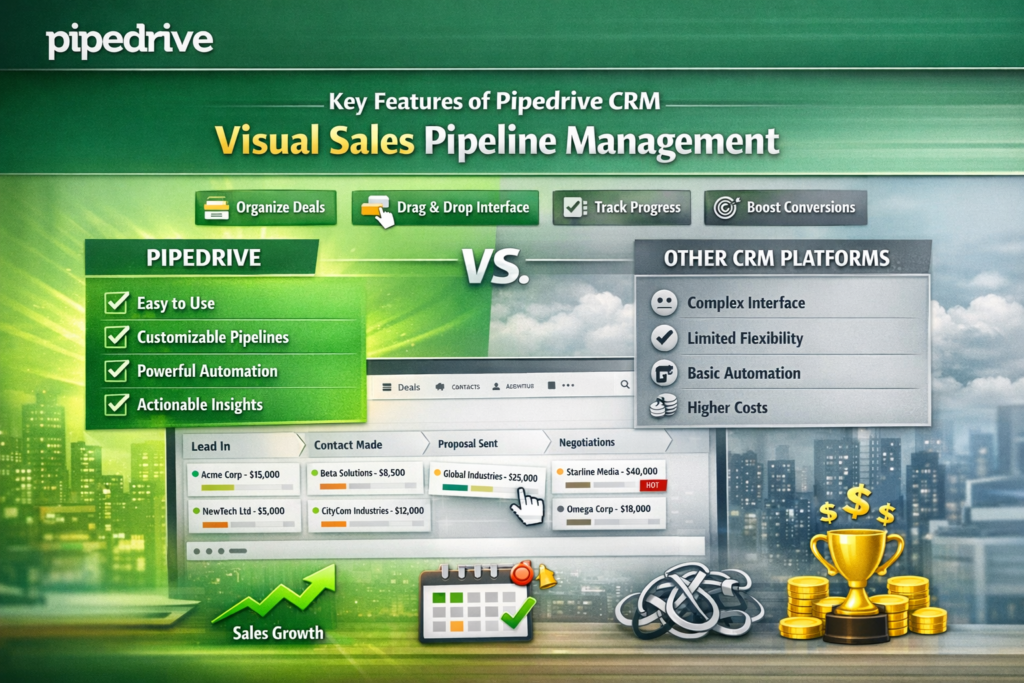
The most recognizable feature of Pipedrive CRM is its visual pipeline interface. Instead of navigating complicated dashboards, sales teams can view their deals as cards organized into different stages of the sales process.
Each stage represents a step in the sales journey, such as:
- Lead captured
- Initial contact
- Proposal sent
- Negotiation
- Deal won or lost
Sales representatives simply drag and drop deals from one stage to another as they progress. This visual approach makes it incredibly easy to track opportunities and identify bottlenecks.
For example, if many deals are stuck in the negotiation stage, managers can quickly investigate the issue and provide guidance to the team. The pipeline view also helps sales reps prioritize their daily tasks because they can instantly see which deals need attention.
This design philosophy reflects Pipedrive’s mission to keep CRM systems intuitive and action-oriented.
Lead and Contact Management
Effective sales teams rely heavily on organized customer data. Pipedrive provides a centralized database where all lead and contact information is stored. Each contact profile contains details such as company information, communication history, notes, and associated deals.
Sales reps can easily track interactions with prospects, including emails, calls, and meetings. This ensures that everyone on the team has access to the same information, improving collaboration and reducing confusion.
The platform also supports email synchronization, allowing users to connect their email accounts directly to the CRM. This means email conversations automatically appear in the contact timeline, creating a complete record of communication.
For businesses that handle large volumes of leads, this feature is incredibly valuable. It eliminates the need to search through email threads and ensures that every interaction is documented.
Sales Automation and Workflow Tools
One of the biggest advantages of modern CRM platforms is automation. Pipedrive includes workflow automation tools that help teams eliminate repetitive tasks.
Some common automation features include:
- Automatic follow-up reminders
- Email templates and sequences
- Deal stage updates based on actions
- Task creation for sales activities
For example, when a deal moves to the proposal stage, Pipedrive can automatically create a task reminding the salesperson to follow up after three days. This ensures that no opportunity is forgotten.
Automation also helps sales managers enforce consistent processes. Instead of relying on individuals to remember every step, workflows guide them through the correct actions.
This combination of automation and visibility significantly improves sales productivity.
Reporting and Sales Forecasting
Data-driven decision-making is essential for growing businesses. Pipedrive offers a range of reporting tools that allow teams to analyze their sales performance in detail.
Users can generate reports on metrics such as:
- Deal conversion rates
- Average sales cycle length
- Revenue forecasts
- Activity performance
The platform also provides customizable dashboards where managers can monitor key performance indicators in real time.
Sales forecasting is particularly important for financial planning. By analyzing the value and probability of deals in the pipeline, Pipedrive can estimate future revenue. This helps businesses plan hiring, marketing investments, and inventory management more effectively.
Pipedrive Pricing Plans Explained
Pipedrive offers multiple pricing tiers designed to accommodate businesses at different stages of growth. Plans typically start with basic pipeline management tools and gradually add advanced automation, reporting, and security features.
According to current pricing information, the platform offers several plans with different capabilities and costs. The entry-level plan begins at around $14 per user per month when billed annually, with higher tiers offering additional features such as advanced automation and AI tools.
Comparison Table of Pipedrive Plans
| Plan | Starting Price (Per User/Month) | Key Features |
| Lite | $14 | Pipeline management, contact tracking |
| Growth | $39 | Email sync, automation, forecasting |
| Premium | $59 | Lead routing, e-signatures, AI tools |
| Ultimate | $79 | Advanced security, support, analytics |
Pipedrive also offers add-ons such as lead generation tools, email campaigns, and project management features for businesses that need additional functionality.
Integrations and Ecosystem
Modern businesses rely on multiple software tools, and CRM platforms must integrate seamlessly with them. Pipedrive supports hundreds of integrations, allowing teams to connect their CRM with marketing platforms, communication tools, and productivity apps.
Examples include:
- Email services
- Calendar apps
- Marketing automation tools
- Accounting software
- Customer support platforms
The platform offers more than 400 integrations and an open API, enabling businesses to customize their workflows and connect Pipedrive with their existing tech stack.
Popular Integrations with Pipedrive
Some of the most widely used integrations include tools for email marketing, project management, analytics, and communication. These integrations allow companies to create a seamless flow of information between departments, ensuring that sales, marketing, and customer service teams stay aligned.
Benefits of Using Pipedrive for Growing Teams
Improved Sales Visibility
One of the most powerful benefits of Pipedrive is transparency. Sales managers can see exactly what their team is working on at any given moment. The visual pipeline provides a clear overview of deal progress, making it easier to identify opportunities and potential issues.
For growing teams, this level of visibility is invaluable. It ensures that no deal gets lost in the shuffle and that managers can provide timely support to their sales representatives.
Better Collaboration Between Sales Reps
Sales rarely happens in isolation. Deals often require collaboration between multiple team members, including account managers, marketers, and executives.
Pipedrive makes collaboration easier by centralizing all communication and deal information. Team members can add notes, assign tasks, and share updates within the CRM. This ensures that everyone stays informed and aligned.
As a result, sales teams operate more efficiently and provide a more consistent experience for customers.
Latest Post:




Potential Limitations of Pipedrive
While Pipedrive offers many advantages, it may not be the perfect fit for every organization. Some businesses prefer all-in-one CRM platforms that include marketing automation, customer support tools, and advanced analytics within a single system.
Pipedrive focuses primarily on sales management. Companies that need comprehensive marketing automation or service management may need additional tools or integrations.
Another consideration is pricing. While Pipedrive is generally more affordable than enterprise-level CRMs, certain add-ons can increase the total cost depending on your team’s needs.
Understanding these limitations helps businesses decide whether Pipedrive aligns with their long-term growth strategy.
Pipedrive vs Other CRM Platforms
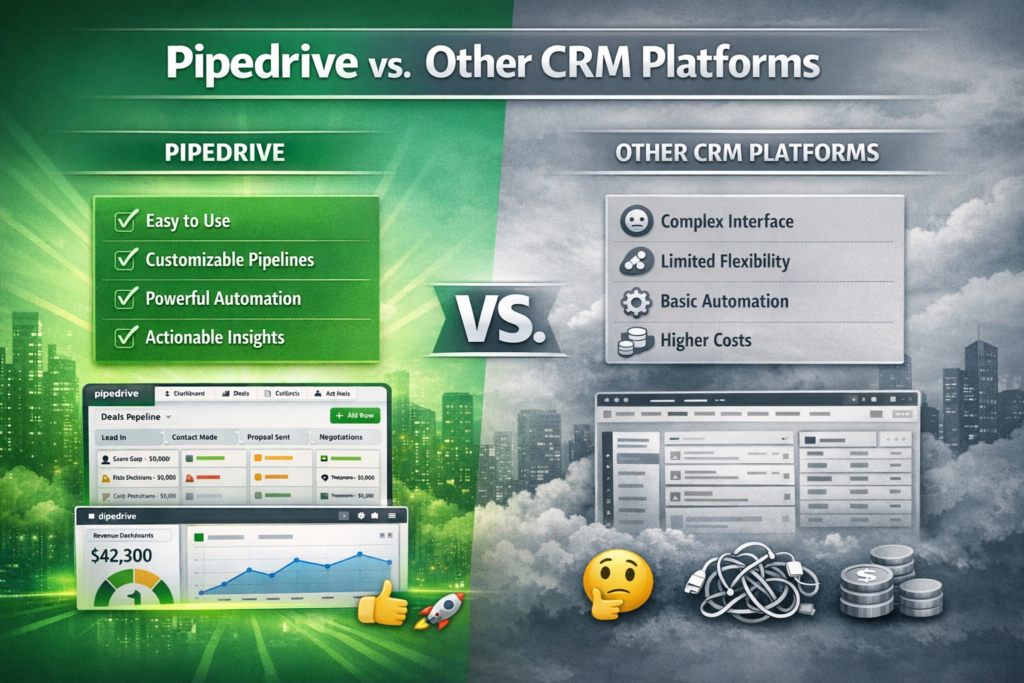
The CRM market is highly competitive, with many powerful platforms available. Some of the most popular alternatives include enterprise solutions and free-entry tools designed for startups.
Many businesses choose Pipedrive because of its simplicity and focus on sales pipelines. In comparison, some CRM platforms offer broader functionality but require more complex setup and training.
For teams that want a lightweight, sales-focused CRM, Pipedrive often stands out as a strong choice.
How to Implement Pipedrive Successfully
Adopting a CRM system requires careful planning. Even the best software can fail if it’s not implemented properly.
Successful Pipedrive implementation usually involves several steps:
- Define your sales pipeline stages.
- Import existing contacts and deals.
- Configure automation workflows.
- Train your sales team on CRM usage.
- Monitor adoption and adjust processes.
When implemented correctly, Pipedrive becomes a central hub for sales operations, helping teams stay organized and focused on closing deals.
Conclusion
Sales teams thrive when they have clarity, structure, and actionable insights. Pipedrive CRM delivers these essentials through its visual pipeline design, automation capabilities, and powerful reporting tools.
By simplifying sales management, the platform enables teams to spend less time on administrative tasks and more time building relationships with customers. Its intuitive interface makes it particularly attractive for startups and growing businesses that want a CRM without the complexity of enterprise software.
While it may not offer every feature found in larger CRM suites, Pipedrive excels at what it was designed to do—help sales teams track deals, stay organized, and close more opportunities.
For companies focused on improving their sales process, Pipedrive remains one of the most practical and effective CRM solutions available today.
Read More:-
ZoomInfo: The Complete B2B Lead Generation Tool for Marketers
How Xero Simplifies Accounting for Digital Marketing Businesses
How Similarweb Helps Marketing Agencies Analyze Competitors
Workable: The Best Recruitment Software for Marketing Agencies
Unbounce: The Best Landing Page Builder for Marketing Agencies
FAQs
Q. Is Pipedrive CRM suitable for small businesses?
A. Yes, Pipedrive is widely used by small businesses because of its easy setup, intuitive interface, and scalable pricing plans.
Q. Does Pipedrive offer a free plan?
A. Pipedrive does not offer a permanent free plan, but it provides a 14-day free trial so users can test the platform before subscribing.
Q. What makes Pipedrive different from other CRM platforms?
A. Its visual sales pipeline and sales-focused design make it easier for teams to manage deals and track progress.
Q. Can Pipedrive integrate with other tools?
A. Yes, Pipedrive supports hundreds of integrations with marketing, communication, and productivity tools.
Q. Is Pipedrive good for large enterprises?
A. While it can be used by larger organizations, it is most commonly preferred by small and medium-sized businesses focused on efficient sales management.