
Discover how Bolt Business empowers online stores with fast checkout, seamless integrations, and powerful tools designed to boost conversions and scale operations. This guide explains why Bolt Business is an ideal solution for e-commerce growth and improved customer experience.
Table of Contents
- Understanding the Rapid Growth of E-commerce
- What Is Bolt Business?
- The Role of Logistics in E-commerce Success
- Key Reasons Bolt Business Supports E-commerce Growth
- Bolt Business vs Traditional Logistics
- Benefits for E-commerce Entrepreneurs
- Real-World Applications of Bolt Business in E-commerce
- The Future of Bolt Business in E-commerce
- Conclusion
- FAQs
Understanding the Rapid Growth of E-commerce
Global E-commerce Market Expansion
E-commerce has transformed the global retail landscape in a way that few industries have ever experienced. In the past decade, online shopping has shifted from being a convenient alternative to becoming the preferred buying method for millions of consumers worldwide. Today, the global e-commerce market exceeds $6 trillion annually, making it one of the largest and fastest-growing industries in the world.
The reason behind this explosive growth is simple: convenience. Customers can shop from their smartphones, compare prices instantly, and receive products delivered directly to their doorstep. However, while the digital storefront may seem effortless, the real challenge lies behind the scenes—getting the product from a warehouse to the customer quickly and efficiently.
This is where logistics becomes the hidden engine powering online retail. Every order placed online triggers a chain of processes including inventory management, packaging, shipping, and last-mile delivery. As e-commerce businesses grow, managing these processes becomes increasingly complex. Entrepreneurs quickly realize that success in e-commerce isn’t just about selling great products—it’s about delivering them faster and more reliably than competitors.
That’s exactly why platforms like Bolt Business have become essential tools for modern online retailers. By combining logistics technology with scalable delivery networks, Bolt enables businesses to handle increasing order volumes without sacrificing speed or customer satisfaction. In a market where delivery speed can make or break a brand, solutions like Bolt Business are becoming indispensable for companies looking to scale.
Why Logistics Is the Backbone of Online Retail
If e-commerce is the body, logistics is the circulatory system that keeps everything running smoothly. Without efficient logistics, even the best online store will struggle to survive. Customers expect fast shipping, real-time tracking, and hassle-free returns. Meeting these expectations requires sophisticated infrastructure that many small or medium-sized businesses simply cannot build on their own.
E-commerce logistics involves several key processes including inventory storage, order fulfillment, transportation, and delivery. Each of these steps must work seamlessly together to ensure customers receive their orders on time. When any part of this chain fails, the result is delayed deliveries, unhappy customers, and lost revenue.
Another reason logistics is so important is the rising demand for faster delivery. Same-day and next-day shipping have become standard expectations in many markets. This puts enormous pressure on businesses to optimize their supply chains and improve delivery efficiency. Companies that fail to meet these expectations risk losing customers to competitors who can deliver faster.
Bolt Business addresses this challenge by providing a logistics ecosystem that integrates delivery technology, driver networks, and operational optimization. Instead of struggling with complex supply chain management, e-commerce companies can focus on what they do best—building products and serving customers. With logistics handled by a specialized partner like Bolt, businesses gain the agility needed to grow in an increasingly competitive digital marketplace.
What Is Bolt Business?
Origins and Evolution of the Bolt Platform
Bolt started as a ride-hailing service but has evolved into a comprehensive platform that offers multiple mobility and delivery solutions. Founded in 2013 by Markus Villig in Tallinn, Estonia, the company rapidly expanded across international markets and now operates in more than 50 countries and over 850 cities worldwide.
What began as a taxi alternative quickly grew into a powerful digital ecosystem. Bolt added services like food delivery, scooter sharing, grocery delivery, and logistics capabilities. This diversification allowed the company to leverage its transportation network for a wide range of services beyond mobility.
The evolution of Bolt into a logistics partner for businesses was a natural progression. Since the platform already had drivers, route optimization technology, and real-time tracking systems, extending these capabilities to e-commerce deliveries made perfect sense. By adapting its infrastructure for business logistics, Bolt created a powerful solution for companies that need fast and reliable delivery systems.
Today, Bolt Business focuses on enabling companies to move goods quickly across cities and regions. It operates as a technology-driven marketplace connecting businesses with delivery partners and logistics solutions. This model makes it highly flexible and scalable, allowing companies of all sizes to benefit from enterprise-level logistics without massive infrastructure investments.
Key Services Offered by Bolt
Bolt Business offers a wide range of services designed to simplify logistics for modern businesses. These services cover several key aspects of delivery operations and supply chain management.
Some of the core services include:
| Service | Description |
| Delivery Logistics | Fast product transportation from warehouses to customers |
| Last-Mile Delivery | Final delivery stage directly to customers’ homes |
| Real-Time Tracking | Live tracking for businesses and customers |
| Route Optimization | Smart routing to reduce delivery time and costs |
| Scalable Delivery Networks | Access to large driver fleets and logistics infrastructure |
These services work together to create an end-to-end logistics ecosystem that supports online retailers. Businesses can integrate Bolt’s delivery system directly into their e-commerce platforms, ensuring that orders are automatically assigned to delivery partners and tracked throughout the shipping process.
This combination of technology, scalability, and convenience is precisely why Bolt Business has become an attractive solution for growing e-commerce companies.
The Role of Logistics in E-commerce Success
Fulfillment and Order Processing
Behind every successful e-commerce store lies a well-organized fulfillment system. When a customer clicks the “buy now” button, the order begins a journey that involves multiple logistical steps. First, the order is confirmed and processed through the online platform. Next, the product must be located within the inventory system, picked from the warehouse shelves, and carefully packed for shipment.
This entire process may seem simple, but it becomes significantly more complicated when businesses start handling hundreds or thousands of orders every day. Without efficient fulfillment systems, delays quickly accumulate. Late shipments lead to dissatisfied customers, negative reviews, and lost repeat purchases.
Bolt Business simplifies fulfillment by integrating delivery services directly into e-commerce workflows. Instead of manually arranging shipping for each order, businesses can automate the process. Orders are instantly assigned to delivery partners, reducing the time between purchase and shipment. This automation significantly improves efficiency and allows businesses to handle larger order volumes without expanding internal logistics teams.
Another advantage is flexibility. Whether a company sells clothing, electronics, or groceries, Bolt’s logistics infrastructure can adapt to different types of deliveries. This versatility makes it a valuable partner for businesses operating in diverse e-commerce sectors.
Last-Mile Delivery Challenges
The last mile—the final step of delivering products to customers—is widely considered the most expensive and complicated part of logistics. Traffic congestion, delivery timing, incorrect addresses, and customer availability all create challenges for businesses trying to ensure smooth deliveries.
In fact, last-mile delivery costs can account for a significant portion of overall shipping expenses. Businesses must balance speed, cost, and reliability to maintain profitability while meeting customer expectations. For small e-commerce companies, building their own last-mile delivery network is often unrealistic.
Bolt Business addresses this challenge through a technology-driven approach. The platform uses advanced route optimization algorithms to determine the most efficient delivery paths. Drivers receive real-time instructions through the Bolt app, allowing them to adjust routes based on traffic conditions and delivery priorities.
This smart routing system reduces delivery times while minimizing operational costs. Customers benefit from faster shipping, while businesses enjoy improved logistics efficiency. The result is a win-win scenario where both retailers and shoppers experience better outcomes.
Key Reasons Bolt Business Supports E-commerce Growth
Fast and Efficient Delivery Networks
Speed is everything in e-commerce. Customers no longer view fast delivery as a luxury—it’s an expectation. Bolt Business supports this demand by providing access to large networks of drivers and delivery partners. Because these networks already exist for ride-hailing and food delivery services, businesses can instantly tap into a robust infrastructure.
This means companies don’t need to build their own delivery fleets. Instead, they can scale their operations by leveraging Bolt’s existing network. As order volumes increase during sales seasons or promotional campaigns, the platform can accommodate the surge without significant delays.
The ability to scale logistics operations quickly is one of the most important advantages for growing e-commerce brands.
Technology-Driven Logistics
Technology lies at the heart of Bolt Business. The platform integrates real-time tracking, automated dispatching, and route optimization tools that streamline logistics operations. Businesses can monitor deliveries through dashboards, while customers receive live updates about their orders.
This transparency builds trust and reduces customer support inquiries related to delivery status. When shoppers know exactly where their package is and when it will arrive, they feel more confident buying from the brand again.
Cost Efficiency for Online Stores
Operating a private delivery fleet requires significant investment in vehicles, drivers, fuel, and maintenance. Bolt Business eliminates these overhead costs by offering logistics as a service. Businesses pay only for the deliveries they need, making it a cost-effective solution.
Lower operational costs allow companies to reinvest resources into marketing, product development, and customer acquisition.
Scalability for Growing Businesses
One of the biggest challenges in e-commerce is scaling operations without breaking the system. Bolt Business is designed to grow alongside businesses. Whether a company handles 50 orders per day or 5,000, the platform can adapt to changing demand.
This scalability ensures that logistics never becomes a bottleneck for growth.
Bolt Business vs Traditional Logistics
Speed and Flexibility
Traditional logistics providers often rely on rigid systems and scheduled delivery routes. While these systems work well for large shipments, they can struggle to meet the fast-paced demands of e-commerce. Bolt Business offers greater flexibility by using on-demand delivery models.
This means deliveries can be scheduled instantly and adjusted dynamically. Businesses gain the ability to respond quickly to customer orders and changing market conditions.
Digital Integration and Automation
Another major advantage is integration. Bolt Business can connect with e-commerce platforms and APIs, enabling automated order processing and delivery management. Traditional logistics providers often require manual coordination, which increases the risk of delays and errors.
Automation improves efficiency and ensures consistent service quality across large volumes of orders.
Latest Post:

Benefits for E-commerce Entrepreneurs
Better Customer Experience
Customer satisfaction is the cornerstone of e-commerce success. Fast shipping, accurate delivery times, and transparent tracking significantly improve the overall shopping experience. Bolt Business helps businesses meet these expectations consistently.
Satisfied customers are more likely to return and recommend the brand to others, creating a powerful cycle of growth.
Increased Operational Efficiency
By outsourcing logistics to a specialized provider, e-commerce entrepreneurs can focus on core business activities such as product development, marketing, and customer engagement. Bolt Business handles the complexities of delivery operations, freeing up valuable time and resources.
This improved operational efficiency allows businesses to scale faster while maintaining high service standards.
Real-World Applications of Bolt Business in E-commerce
Many modern e-commerce companies rely on logistics platforms like Bolt to streamline their delivery operations. Retailers selling fashion, electronics, groceries, and lifestyle products can all benefit from integrated delivery services.
These partnerships allow businesses to deliver products quickly without building expensive infrastructure. As online retail continues to expand globally, the demand for flexible logistics solutions like Bolt Business will only increase.
The Future of Bolt Business in E-commerce
Sustainable Delivery and Innovation
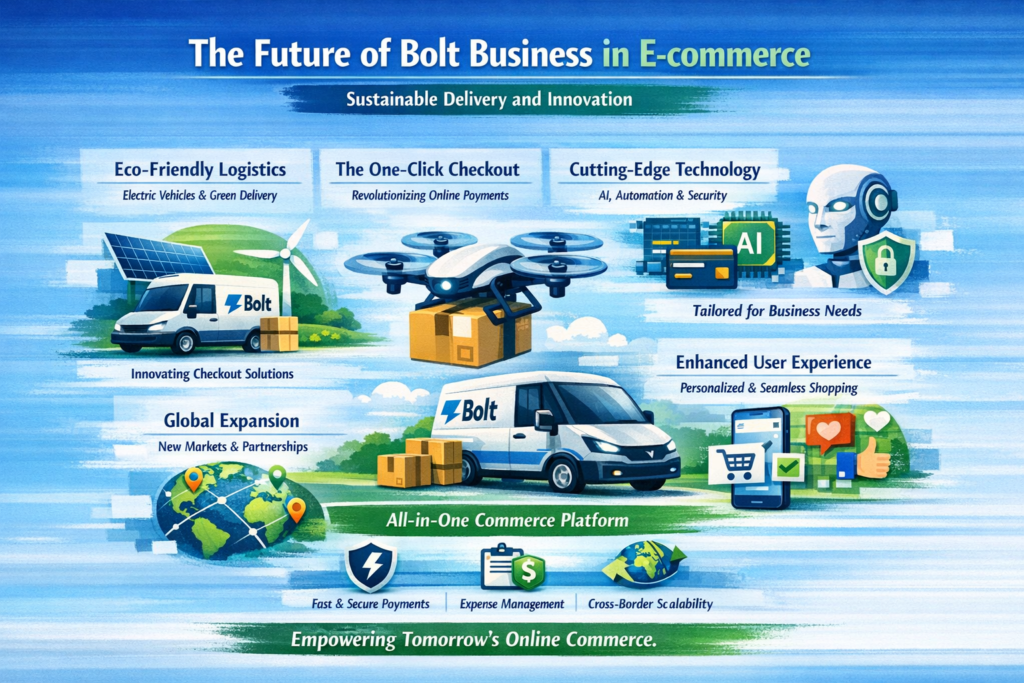
The future of logistics will be shaped by technology, automation, and sustainability. Many logistics companies are already exploring electric delivery vehicles and eco-friendly transportation methods to reduce environmental impact.
Platforms like Bolt are well positioned to lead this transformation. By combining smart logistics technology with sustainable delivery strategies, Bolt Business can help e-commerce companies grow responsibly while minimizing their carbon footprint.
Conclusion
E-commerce growth depends heavily on efficient logistics systems that can deliver products quickly and reliably. Bolt Business provides a powerful solution by combining advanced technology, scalable delivery networks, and cost-effective logistics services. Businesses no longer need to build complex supply chains from scratch—instead, they can leverage Bolt’s infrastructure to streamline operations and focus on expanding their brand.
As online shopping continues to dominate global retail, companies that invest in smart logistics solutions will have a significant competitive advantage. Bolt Business stands out as one of the most promising platforms for supporting e-commerce growth in the modern digital economy.
Read More:-
ZoomInfo: The Complete B2B Lead Generation Tool for Marketers
How Xero Simplifies Accounting for Digital Marketing Businesses
How Similarweb Helps Marketing Agencies Analyze Competitors
Workable: The Best Recruitment Software for Marketing Agencies
Unbounce: The Best Landing Page Builder for Marketing Agencies
FAQs
1. What is Bolt Business?
Bolt Business is a logistics and delivery platform that helps companies manage transportation, delivery, and supply chain operations using technology-driven systems.
2. How does Bolt Business help e-commerce companies?
It provides scalable delivery networks, real-time tracking, automated logistics management, and faster shipping options.
3. Is Bolt Business suitable for small online stores?
Yes. Small businesses can use Bolt’s infrastructure without investing in their own delivery fleets, making it a cost-effective logistics solution.
4. Does Bolt Business support same-day delivery?
Many logistics platforms like Bolt offer same-day or next-day delivery options depending on location and service availability.
5. Why is logistics important in e-commerce?
Logistics ensures that products move efficiently from warehouses to customers, directly affecting delivery speed, customer satisfaction, and overall business success.