

Travel creators rely on reliable web hosting to showcase travel experiences, upload high-quality images, publish destination information, and grow their online readership. This guide to WebHosting UK Com Ltd. explores its hosting options, advertised prices, performance-related features, security tools, and support services to help travel creators choose a suitable plan.
Table of Contents
- Introduction to WebHosting UK Com Ltd.
- Understanding the Main Hosting Options
- Managed WordPress Hosting for Content Creators
- VPS and Dedicated Hosting for Established Websites
- Important Hosting Features for Travel Creators
- Selecting a Hosting Package for Your Travel Website
- WebHosting UK Hosting Plans and Pricing Comparison
- Pricing, Performance, and Customer Support
- How Web Hosting Supports Travel Blog Growth
- Shared Hosting vs. VPS Hosting for Travel Websites
- Is Managed WordPress Hosting a Good Choice for Travel Creators?
- Advantages and Disadvantages of WebHosting UK
- How to Optimize a Travel Blog for Better Performance
- Common Web Hosting Mistakes Travel Bloggers Should Avoid
- How to Choose the Best Hosting Plan
- Conclusion
- Frequently Asked Questions
Introduction to WebHosting UK Com Ltd.
A travel website is more than a collection of holiday photographs. It can become a platform for sharing travel experiences, recommending destinations, publishing itineraries, and earning income through affiliate partnerships. To manage all these activities effectively, creators need hosting that supports their content and provides room for future growth.
WebHosting UK Com Ltd. provides web hosting services for individuals, bloggers, and businesses looking to establish an online presence. Its hosting services cover several options, including shared web hosting, managed WordPress solutions, virtual private servers (VPS), and dedicated server hosting. These options allow website owners to select a hosting environment based on their technical skills, website requirements, and available budget.
For travel creators, the right hosting package should balance affordability, website speed, storage capacity, and security. A blog featuring occasional travel updates has different requirements from a photography website with thousands of images or a commercial platform attracting visitors from multiple countries. Understanding the available plans can help you avoid unnecessary expenses while ensuring your website has the resources it needs.
Understanding the Main Hosting Options
Every travel website develops differently. Some travel bloggers start by publishing a handful of destination guides, while others develop comprehensive travel websites with hotel suggestions, trip plans, and interactive mapping features. WebHosting UK’s different hosting categories offer potential solutions for websites at various stages of development.
Before selecting a package, consider your expected traffic, preferred content management system, technical experience, and plans for monetisation. Choosing hosting according to these factors can make managing your website easier as your audience grows.
Shared Hosting for New Travel Bloggers
Shared hosting is often a sensible entry point for creators launching their first website. Several websites operate on the same physical server, sharing its underlying resources. This arrangement helps keep hosting costs relatively low, making it attractive to bloggers who are still building their readership.
WebHosting UK has listed its Premium Linux hosting plan at a starting price of £3.29 per month, with VAT charged separately. Its published specifications include 10GB SSD storage, unmetered bandwidth, cPanel, technical support, and hosting for two websites. Availability and included features should be checked against the provider’s current package details before purchasing.
This option may work well for travel diaries, local tourism blogs, destination guides, and personal photography portfolios. The cPanel interface provides tools for managing website files, databases, email accounts, and other hosting functions without requiring extensive server administration knowledge.
However, shared hosting may become less suitable when traffic increases significantly or your website uses demanding applications. Before signing up, review the storage allowance, resource restrictions, backup arrangements, and renewal charges to understand the full value of the package.
Managed WordPress Hosting for Content Creators
WordPress gives travel bloggers a flexible way to publish articles, organise destinations, and customise their websites. Its themes and plugins support features such as image galleries, search engine optimisation, contact forms, social sharing, and affiliate marketing.
WebHosting UK has advertised managed WordPress hosting from £4.79 per month, excluding VAT. Depending on the selected package, listed features include NVMe storage, allocated CPU and memory, daily snapshots, WordPress Toolkit, AccelerateWP Suite, and technical support. Check the current plan description to confirm which features are included.
For travel creators, a WordPress-focused hosting environment can simplify website management and provide tools intended to support performance. You can organise articles by destination, create dedicated pages for travel guides, display photography collections, and build landing pages for promotional campaigns.
Nevertheless, hosting is only one factor in website speed. Large image files, poorly optimised themes, excessive plugins, and inefficient scripts can still affect performance. Combining suitable hosting with caching, image compression, and regular maintenance can help deliver a better experience for readers.
VPS and Dedicated Hosting for Established Websites
A Virtual Private Server, or VPS, provides a virtualised server environment with allocated computing resources. It can be useful when a travel website requires more capacity, additional configuration options, or greater control than a basic hosting package provides.
WebHosting UK has offered managed VPS hosting plans starting at £19.14 per month, excluding VAT. Published features include NVMe storage, allocated CPU and memory, daily snapshots, and control-panel options, depending on the configuration. The exact resources and management services should be confirmed before choosing a plan.
Dedicated hosting offers another level of infrastructure by providing a customer with an entire physical server. WebHosting UK has advertised dedicated-server options starting from £74.55 per month, excluding VAT. Such services may be worth investigating for established travel publishers, high-traffic destination portals, and resource-intensive online businesses.
Most new travel bloggers do not need this level of infrastructure immediately. Starting with a smaller package and upgrading when traffic or technical requirements increase can be a more cost-effective strategy.
Important Hosting Features for Travel Creators
Storage, Website Speed, and Bandwidth
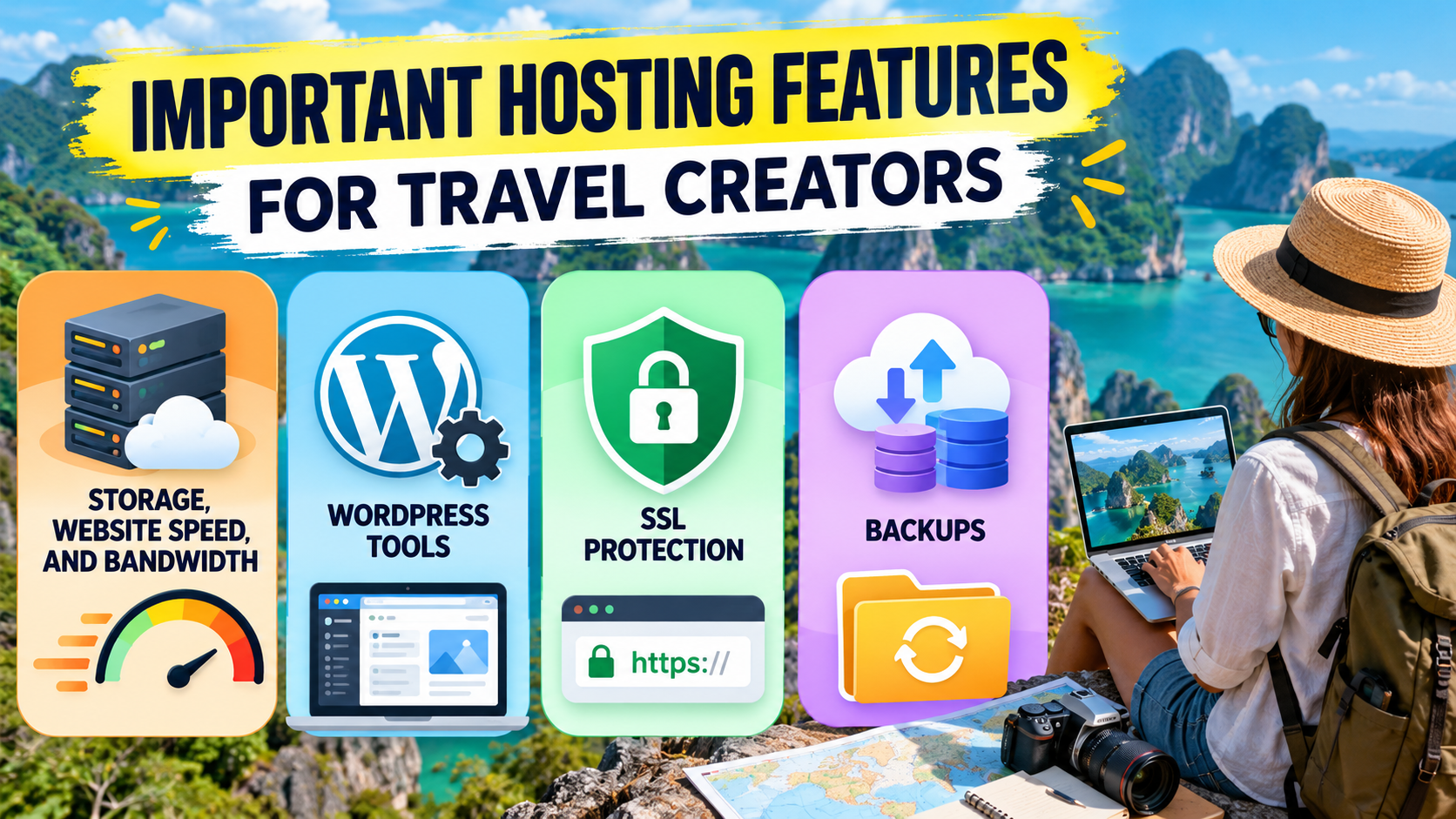
Travel websites frequently contain high-resolution photographs, destination maps, downloadable itineraries, and other media files. Storage determines how much website data can be kept on the server, while bandwidth and resource policies affect how data transfers and visitor requests are handled.
A small blog with compressed photographs may operate comfortably with a modest storage allowance. However, creators publishing extensive photography collections or frequently adding new destination guides should estimate their storage requirements carefully.
Website speed also influences the browsing experience. Visitors may become frustrated when image-heavy pages load slowly, especially when accessing content through mobile networks. SSD and NVMe storage can help improve data access, but they cannot compensate for an inefficient website.
Compress images before uploading them, use an efficient theme, enable caching, and consider a content delivery network when your audience is geographically dispersed. These improvements can reduce unnecessary resource consumption and help your website serve visitors more efficiently.
WordPress Tools, SSL Protection, and Backups
A reliable travel website needs appropriate security and recovery measures alongside its hosting resources. WordPress management tools can simplify routine website tasks, while an SSL certificate enables encrypted connections between the website and its visitors.
Encryption is particularly important if your website collects newsletter subscriptions, handles enquiries, or connects visitors to payment services. You should also keep your software updated, use strong passwords, and install reputable security tools where appropriate.
Backups provide another essential layer of protection. Losing published articles, original photographs, and carefully prepared itineraries could mean hours of work have to be repeated. WebHosting UK’s published hosting information has included daily backup or snapshot options on certain packages.
Before choosing a plan, check backup frequency, retention periods, restoration procedures, and any additional charges. Maintaining a separate backup outside your hosting account provides another way to recover important website data if your primary hosting account becomes unavailable.
Selecting a Hosting Package for Your Travel Website
Hosting Recommendations for Beginner Bloggers
If you are launching your first travel blog, concentrate on the essentials rather than purchasing the most powerful server available. You will probably need a domain name, a suitable content management system, a mobile-friendly design, and enough storage for your initial articles and photographs.
Shared hosting can provide an affordable starting point for destination stories, travel advice, packing guides, and budget itineraries. It allows you to focus on creating content instead of managing complex server infrastructure.
WebHosting UK’s Premium Linux package is worth comparing if you want to host a small website or manage multiple personal projects. If WordPress is central to your publishing workflow, compare the managed WordPress offering as well.
Your decision should reflect the features you genuinely need. Consider the total cost, storage limits, available support, backup provisions, and renewal terms before committing to a long-term subscription.
Hosting for Expanding Travel Brands
As your readership grows, your website may need more computing resources and stronger performance management. Increased search traffic, large image galleries, additional plugins, and affiliate marketing features can place greater demands on your hosting environment.
Managed WordPress hosting may be appropriate if you want WordPress-specific tools and allocated resources. A VPS could become a better fit if your website requires greater capacity or more control over its server configuration.
Monitor your website regularly before deciding to upgrade. Page-loading performance, server resource usage, traffic reports, and recurring errors can help identify whether your current package is becoming restrictive.
Remember that a more expensive hosting plan does not automatically improve search engine rankings. Useful content, technical SEO, mobile usability, internal linking, and an effective user experience remain important parts of a successful travel website.
WebHosting UK Hosting Plans and Pricing Comparison
The following table summarises previously advertised starting prices for the provider’s main hosting categories. Prices and specifications can change, so verify the current offers and billing conditions before making a purchase.
| Hosting category | Advertised starting price | Suitable website type |
| Premium Linux hosting | £3.29/month | New blogs and smaller travel websites |
| Managed WordPress hosting | £4.79/month | WordPress-based travel publications |
| Managed VPS hosting | £19.14/month | Growing websites with greater resource requirements |
| Dedicated servers | £74.55/month | Large travel platforms and demanding applications |
Prices are advertised starting figures in British pounds and exclude VAT. The final cost may vary according to billing terms, configuration, promotional offers, and renewal rates.
When comparing these options, look beyond the initial monthly charge. A package with additional storage or useful management tools might provide better value for your particular website, while an advanced server could be unnecessary for a new blogger.
Pricing, Performance, and Customer Support
Managing expenses is important when establishing a travel website, particularly before advertising or affiliate revenue becomes consistent. Your hosting budget should leave enough room for other essentials, including photography equipment, content production, website maintenance, and marketing.
WebHosting UK has advertised 24/7 technical support and a 99.9% uptime service-level agreement for shared hosting. Its WordPress hosting information also promotes tools intended to support website performance and security. Review the latest service documentation to confirm which commitments apply to your chosen package.
Advertised specifications alone cannot guarantee a particular loading speed or uninterrupted service for every website. Actual results depend on server configuration, website optimisation, visitor demand, and other technical factors.
How Web Hosting Supports Travel Blog Growth
A reliable hosting service can play an important role in the growth of a travel blog. As your website attracts more visitors, you may need additional storage, improved loading speeds, and resources capable of handling increased traffic. A suitable hosting plan helps you publish new articles, display travel photographs, and maintain a smooth browsing experience for your readers.
For travel creators, website performance matters because visitors often browse destination guides, compare accommodation options, and explore travel itineraries before making decisions. Choosing a hosting package that matches your website’s current needs and future goals can help you build a stronger online presence.
Shared Hosting vs. VPS Hosting for Travel Websites
Shared hosting and virtual private server (VPS) hosting can suit different stages of a travel website’s development. Understanding their differences helps you choose a plan based on your budget, technical skills, and expected traffic.
Shared hosting is generally a practical starting point for beginners who publish articles, maintain a small photo gallery, and want to keep website costs manageable. Since server resources are shared with other customers, performance can depend partly on the hosting environment and resource limits.
VPS hosting provides a more isolated environment with allocated resources, making it worth considering for websites that require greater control or have more demanding workloads. It can be suitable for established travel blogs, larger content libraries, and websites experiencing consistent growth. However, the level of server management depends on the plan, so check whether technical administration is included.
Is Managed WordPress Hosting a Good Choice for Travel Creators?
Managed WordPress hosting may be useful for bloggers who want to spend more time creating content and less time managing technical tasks. Depending on the package, the service may include WordPress-specific performance features, software updates, security tools, or technical assistance.
WordPress also offers a wide selection of themes and plugins for travel websites. You can use these tools to create destination categories, organize travel guides, display image galleries, publish itineraries, and add contact forms. Before choosing a managed plan, confirm exactly which services are included because features vary between providers and packages.
Also Read:
Hotel NYX Cancun (US): Best Rooms and Booking Tips
Spartan UK for Beginners: A Step-by-Step Travel Guide
Kiwi US Travel Tips: A Smart Guide for Hassle-Free Trips
Quidco UK New Member Acquisition CPL: A Smart Way to Monetize Travel Content
Ski-planet FR for Beginners: A Complete Ski Travel Guide
Advantages and Disadvantages of WebHosting UK
Comparing the strengths and limitations of a hosting provider can help you decide whether its services match your expectations.
| Advantages | Potential limitations |
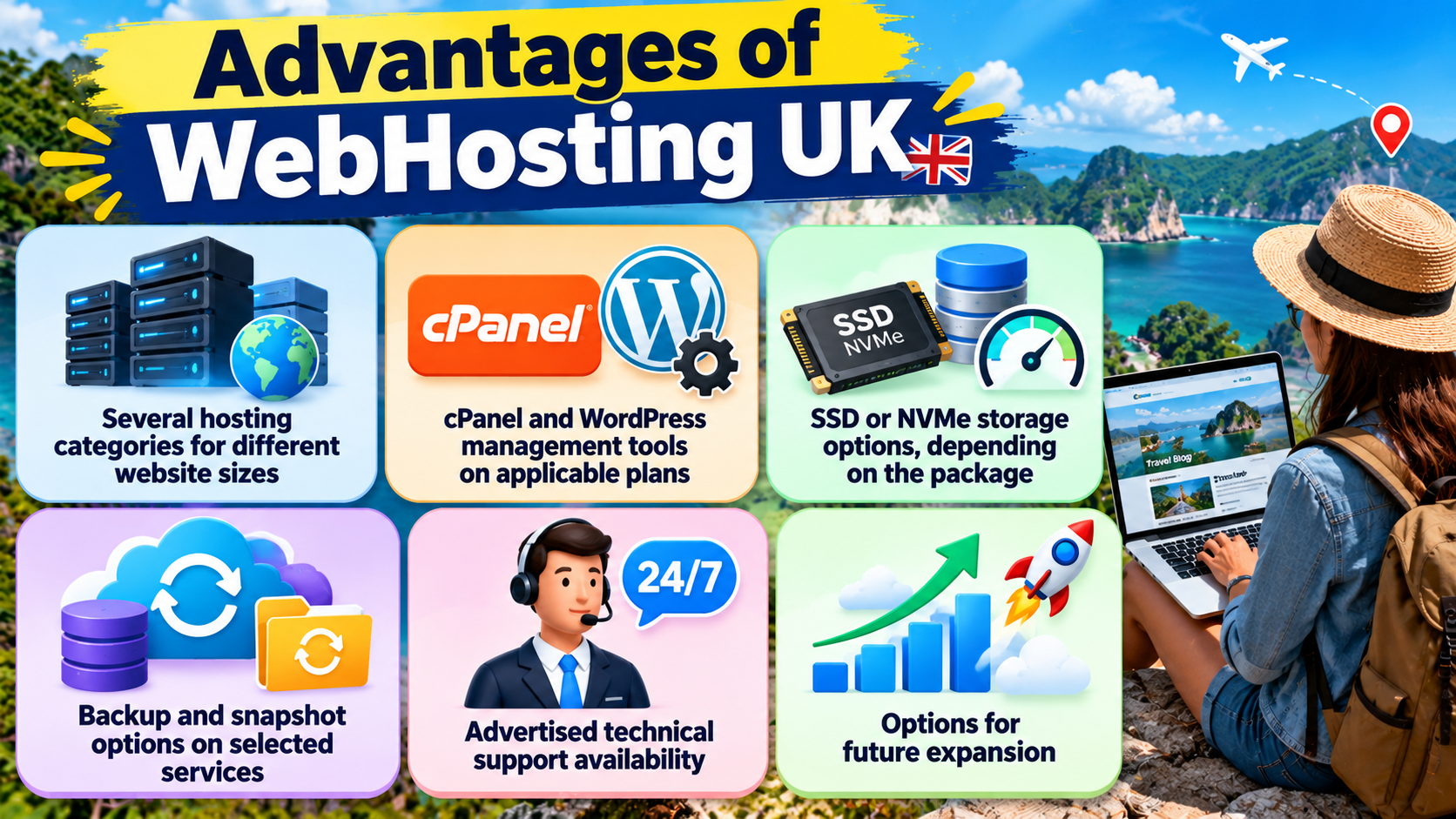
| Several hosting categories for different website sizes | Advanced infrastructure can be unnecessary for beginners |
| cPanel and WordPress management tools on applicable plans | New users may need time to learn the available controls |
| SSD or NVMe storage options, depending on the package | Storage and resource limits vary by plan |
| Backup and snapshot options on selected services | Retention and recovery conditions require verification |
| Advertised technical support availability | Individual support experiences may differ |
| Options for future expansion | VPS and dedicated environments can require more technical knowledge |
Overall, WebHosting UK offers several hosting categories worth considering for travel-related websites. Shared hosting can be appropriate for small blogs, managed WordPress hosting can suit WordPress publishers, and VPS or dedicated hosting may serve larger projects.
The most suitable choice depends on your actual resource requirements, budget, technical confidence, and the provider’s current terms. Evaluating these factors together is more useful than selecting a package based on price alone.
How to Optimize a Travel Blog for Better Performance
Even a suitable hosting plan may not deliver the best results if your website is poorly optimized. Travel bloggers can improve website performance by following a few practical steps.
- Compress images: Resize photographs according to their display dimensions and use efficient image formats.
- Enable caching: Browser and page caching can reduce repeated processing and help pages load faster.
- Limit unnecessary plugins: Keep only the extensions your website genuinely needs.
- Use a CDN where appropriate: A content delivery network can help serve static files from locations closer to visitors.
- Choose a lightweight theme: A well-optimized design can reduce unnecessary code and improve usability.
- Monitor website speed: Test important landing pages and destination guides regularly to identify performance problems.
These improvements can support a better user experience and help visitors navigate your travel content more easily.
Common Web Hosting Mistakes Travel Bloggers Should Avoid
Choosing a hosting service based only on its introductory price can lead to unexpected limitations later. Travel creators should review renewal costs, storage limits, resource restrictions, backup policies, and support availability before committing to a plan.
Another common mistake is purchasing a high-performance package before it is necessary. A small blog may not require VPS or dedicated hosting immediately. Starting with a suitable entry-level plan and upgrading when the website’s requirements change can help manage costs.
Bloggers should also avoid relying exclusively on their hosting provider for content protection. Maintain independent backups of important articles and media files, use secure login credentials, and keep website software updated. Taking these precautions helps reduce the risk of avoidable data loss and security issues.
Latest Posts:




How to Choose the Best Hosting Plan
Start by identifying the purpose of your travel website. A personal blog publishing occasional articles will have different requirements from a professional publication featuring hundreds of destination guides, extensive photography, and commercial partnerships.
Next, estimate your storage needs and expected traffic. If you regularly publish large photographs, consider the space required for both existing media and future uploads. If your audience is spread across different countries, investigate caching and content delivery options that can help improve loading performance.
Conclusion
WebHosting UK Com Ltd. provides hosting options that travel creators can evaluate according to their website size, budget, and technical requirements. Shared hosting may be a suitable starting point for new bloggers, while managed WordPress hosting offers an option for creators who rely on WordPress publishing tools. VPS and dedicated hosting are worth considering when a website develops more demanding infrastructure needs.
Before purchasing, verify the provider’s latest prices, included resources, renewal terms, and service conditions. Pairing suitable hosting with secure website practices, regular backups, compressed images, and valuable travel content can help you build a website that is easier to maintain and ready to grow.