

Planning a trip to Germany can be exciting. You may already have a list of places you want to see, such as Berlin, Munich, Hamburg, Cologne, Frankfurt, or the Bavarian Alps. You may also be thinking about hotels, train tickets, restaurants, museums, local attractions, and your travel budget. But there is another part of travel planning that is easy to overlook: language preparation. Germany is a country where English can often help international visitors, but knowing some German can make everyday situations more comfortable and personal. Germany Travel states that German is the official language and that Standard German is understood throughout the country, while many people also speak English.
Table of Contents
- Why Learn German Before Visiting Germany?
- What Is LinguaTV DE?
- Why LinguaTV Works Well for Travelers
- German Courses Available on LinguaTV
- Key Features of LinguaTV DE
- German Words Every Traveler Should Know
- Prepare for Hotels, Restaurants, and Shopping
- Learn German for Trains and Public Transport
- Understand German Culture Through Language
- How to Use LinguaTV Before Your Trip
- A Simple German Learning Routine for Travelers
- LinguaTV DE vs Traditional Language Study
- Benefits of Learning German Before Your Trip
- Common Mistakes Travelers Make With German
- Is LinguaTV DE Suitable for Beginners?
- Tips for Using German Confidently in Germany
- Planning Your Germany Trip Beyond Language
- Conclusion
- Frequently Asked Questions
Why Learn German Before Visiting Germany?
Learning a little German before traveling is not about becoming fluent in a few weeks. It is about giving yourself enough language knowledge to handle simple situations without feeling lost. Imagine arriving at a railway station and seeing several German signs, hearing an announcement, or needing to ask whether a train is going to your destination. Even if you can use an app or ask someone in English, recognizing a few German words can help you understand what is happening around you. Germany Travel confirms that English is widely spoken, but German remains the main language used across the country.
A basic German vocabulary can also make small interactions more enjoyable. Saying “Guten Morgen”, “Danke”, or “Entschuldigung” can help you begin conversations naturally. You do not need perfect grammar to show that you have made an effort. Travel is often about small moments: ordering breakfast, checking into a hotel, buying a ticket, asking for directions, or speaking with someone at a local shop. These moments can feel easier when you recognize the language around you. LinguaTV is designed around practical language use, with authentic videos and exercises that connect vocabulary and expressions to real situations.
What Is LinguaTV DE?
LinguaTV DE refers to LinguaTV’s German-language learning resources. LinguaTV is an online language-learning platform that provides professionally produced videos and interactive exercises. Its German catalog includes courses for beginners and learners at higher levels, with lessons covering vocabulary, grammar, listening, reading, writing, speaking, and practical language use.
One reason the platform can work well for travelers is its focus on situations rather than only textbook rules. A traveler does not usually need a long grammar lecture before ordering a coffee or asking where a train leaves. What matters first is understanding useful expressions and hearing how they sound when spoken naturally. LinguaTV’s support information says its professionally produced videos demonstrate how native speakers use language in authentic situations, followed by exercises connected with the video content.
Video-Based German Learning
Video can make language practice easier to connect with real travel experiences. When you see people speaking in a situation, you get more than vocabulary. You can notice tone, context, body language, pronunciation, and the way a phrase fits into a conversation. This can be particularly helpful for travelers because many situations abroad happen quickly.
LinguaTV describes its method as an audio-visual approach, combining what learners see and hear with interactive practice. Its FAQ says the platform includes more than 1,000 authentic videos and more than 30,000 interactive exercises across five languages, with content classified according to CEFR levels. For someone preparing for Germany, this can provide a structured way to practice instead of jumping randomly between vocabulary websites.
Why LinguaTV Works Well for Travelers
A travel-focused language plan should be practical. You have limited time before departure, so spending hours learning words you will never use may not be the best approach. A better method is to focus first on situations that are almost certain to happen: transportation, accommodation, food, shopping, directions, greetings, emergencies, and simple social conversations.
LinguaTV’s courses include travel-oriented language content, and the platform specifically says learners can practice language needed for a trip and train vocabulary for specific situations. That makes it possible to build your preparation around your actual itinerary. If you are visiting Munich, for example, you can concentrate on transportation, restaurants, hotels, sightseeing, and everyday communication instead of trying to master every area of German.
Learn German Through Real Situations
Real situations are easier to remember when you connect words with a scene. Instead of simply memorizing “Bahnhof”as a vocabulary item, imagine yourself looking for the railway station. Instead of learning “Rechnung” as an isolated word, imagine asking for the bill at a restaurant. The mental connection between language and action can make the vocabulary more useful when you actually need it.
LinguaTV’s German travel content includes lessons such as “Der Urlaub”, and its beginner material combines videos with exercises for vocabulary, grammar, and pronunciation. This kind of practice can help transform German from something you study into something you recognize and use.
Practice Listening and Speaking
Reading German is only one part of travel communication. You also need to understand what people say to you. A station announcement, hotel employee, waiter, or shop assistant may speak faster than a textbook recording. Regular listening practice can help your ears become more familiar with German sounds and rhythm.
LinguaTV provides exercises for listening, vocabulary, grammar, spelling, and expressions, while its German offering also includes an AI-supported conversation trainer with speech recognition. For a traveler, speaking practice can be especially useful because it reduces the gap between knowing a phrase on paper and actually saying it aloud.
German Courses Available on LinguaTV
LinguaTV provides several German courses for different learning levels. Its current course listing includes Deutsch für Anfänger 1.1, Deutsch für Anfänger 1.2, Deutsche Grammatik A1, and A2-level courses, among other options. The beginner 1.1 course is listed at A1 with 21 lessons and around 950 exercises, while beginner 1.2 is listed with 20 lessons and around 1,400 exercises.
This range means travelers can choose a starting point based on their existing knowledge. A complete beginner can start with basic everyday German, while someone who already knows common phrases can move toward more advanced material. LinguaTV also lists German learning from A1 through C1, including general German, business German, and industry-focused options.
Beginner German Courses
If you have never studied German, beginning with A1 material makes sense. You can learn greetings, numbers, basic questions, simple sentences, and common everyday vocabulary. These basics may appear simple, but they form the foundation for useful travel conversations.
The advantage of starting early is that you can repeat the same material several times. You might watch a lesson today, practice the exercises tomorrow, and return to the vocabulary a few days later. Repetition matters because travel language needs to be available quickly when you need it.
A1 and A2 Learning Options
A1 is useful for building basic communication skills, while A2 material can help you handle a wider range of everyday situations. LinguaTV’s current German course catalog includes both A1 and A2 options.
If your trip is several months away, you could start with A1 and gradually add A2 material. If you are traveling soon, focus on selected practical lessons instead of trying to complete an entire level. Your target should be useful communication, not collecting certificates.
Key Features of LinguaTV DE
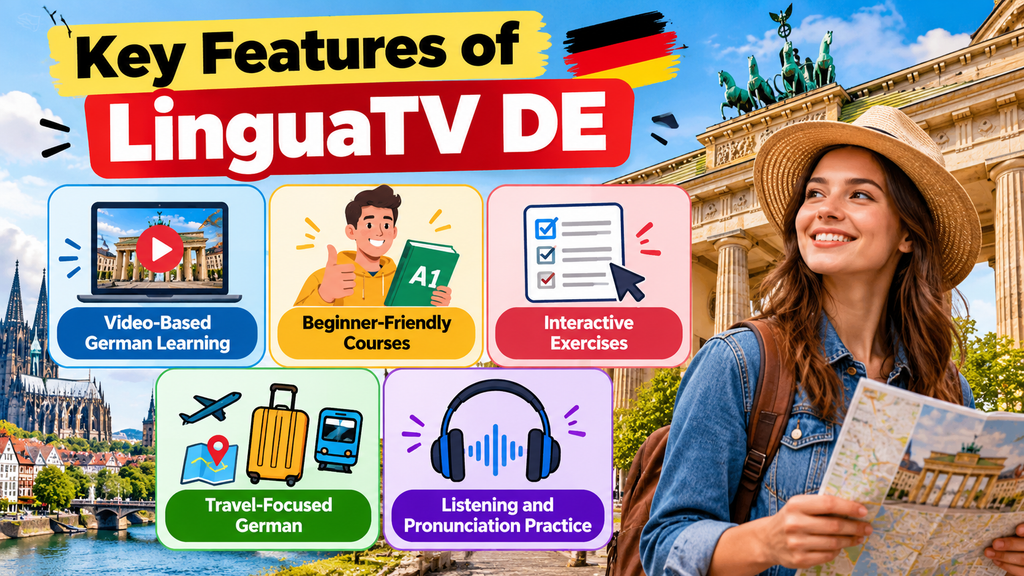
Video-Based German Learning: Learn German through engaging videos that show vocabulary and expressions in practical situations.
Beginner-Friendly Courses: Offers German courses for beginners, including A1-level content, making it suitable for people starting from zero.
Interactive Exercises: Practice vocabulary, grammar, listening, and other language skills through interactive activities.
Travel-Focused German: Learn useful German expressions for situations such as hotels, restaurants, shopping, transportation, and asking for directions.
Listening and Pronunciation Practice: Hear German spoken in realistic situations and improve your understanding of pronunciation and everyday speech.
German Words Every Traveler Should Know
A small travel vocabulary can go a long way. Start with words and phrases related to greetings, directions, transportation, food, accommodation, and basic requests. You do not need thousands of terms to get started. You need the right terms that match the situations you are likely to encounter.
Some useful categories include greetings such as Guten Morgen and Guten Tag, polite expressions such as Danke and Bitte, and questions related to location and transportation. Learning numbers is also valuable because prices, platform numbers, room numbers, times, and addresses appear throughout a trip. Once these basics become familiar, you can gradually add more vocabulary based on your itinerary.
Useful Phrases for Daily Travel
Try building a personal travel phrase list before departure. Include phrases for asking directions, ordering food, checking into accommodation, buying tickets, and asking for help. Practice each phrase aloud rather than only reading it.
LinguaTV’s learning model can support this kind of preparation because its lessons combine video, vocabulary, expressions, and interactive exercises. The key is to practice consistently. Ten or fifteen focused minutes every day can be more useful than one long study session followed by several days without practice.
Prepare for Hotels, Restaurants, and Shopping
Hotels and restaurants are some of the easiest places to use basic German. You may need to say your name, confirm a reservation, ask about breakfast, request something from your room, order food, or ask for the bill. These situations repeat common patterns, so they are good targets for beginners.
Shopping also gives you opportunities to practice. You may need to ask whether a product is available, understand a price, request a different size, or ask where something is located. Germany Travel notes that the euro is used in Germany and that both cash and card payments are common, although cash remains popular. Knowing basic German numbers and payment-related words can make these small interactions easier.
Learn German for Trains and Public Transport
Germany is well known for its extensive transport network, and many travelers will use trains, buses, trams, or local public transport during their trip. Transportation is also one of the situations where language recognition can be extremely useful. You may encounter words such as Bahnhof, Zug, Gleis, Ausgang, and Eingang on signs and information screens.
You do not need to memorize every transportation term. Focus on recognizing the words that can help you understand where you are going. Combine vocabulary practice with travel scenarios so that a German word immediately connects with an action. If you are taking a train from one city to another, for example, practice the words related to tickets, platforms, departure times, arrival times, and changes.
Understand German Culture Through Language
Language and culture are closely connected. When you learn even basic German, you begin to notice how people communicate, greet each other, ask questions, and respond in everyday situations. You also become more aware that some expressions cannot be understood perfectly by translating each individual word.
LinguaTV highlights cultural understanding as one of the benefits of learning German and connects language learning with German literature, films, music, art, travel, and communication. That cultural element can make a trip feel different. Instead of simply observing Germany as a tourist, you begin to recognize pieces of the language used around you.
How to Use LinguaTV Before Your Trip
The best approach is to start with your travel date and work backward. If you have eight weeks, create a simple weekly plan. Begin with greetings and basic vocabulary, then move toward transportation, accommodation, food, shopping, directions, and social conversations. During the final weeks, spend more time listening and speaking instead of only learning new vocabulary.
LinguaTV’s flexible structure supports short learning sessions, and its German page describes its self-learning courses as micro-learning units that can be used through a browser or mobile app. This is useful for busy travelers because language practice can fit into a daily routine. You can study during a break, while commuting, or at home before going to bed.
A Simple German Learning Routine for Travelers
A simple routine might begin with 10 to 20 minutes each day. Spend the first few minutes reviewing old vocabulary, then watch or listen to a lesson, complete the related exercises, and finish by speaking several useful sentences aloud. The following day, review those same sentences before moving to something new.
The important part is consistency. Language learning is less like filling a suitcase and more like training a muscle. You build ability through repeated use. LinguaTV’s combination of videos and exercises gives learners opportunities to encounter and practice the same language in different ways.
LinguaTV DE vs Traditional Language Study
Traditional classroom learning can be valuable, particularly when you want direct feedback from a teacher and structured interaction with other students. However, it may not always fit a traveler’s schedule. Online learning provides more flexibility because you can choose when and where to study.
LinguaTV combines multimedia lessons with interactive practice, and its platform is designed for different learning levels and purposes. That does not mean online learning has to replace every other method. You can use LinguaTV as your main preparation tool and supplement it with conversations, German podcasts, travel videos, flashcards, or practice with native speakers.
| Learning Method | Useful for Travel Preparation | Main Advantage |
| LinguaTV | Yes | Video and interactive practice |
| Classroom course | Yes | Teacher guidance |
| Flashcards | Yes | Fast vocabulary review |
| Conversation practice | Yes | Speaking confidence |
| Travel phrasebook | Yes | Quick reference |
| Translation app | Yes | Help during difficult situations |
Also Read:
FlixBus US Booking Tips: Save More on Long-Distance Travel
oeticket.com AT Explained: Everything Tourists Need to Know
Parcel ABC UK: Complete Guide for International Travelers in 2026
Rumbo PT Travel Guide: Best Places, Tips, and Hidden Gems
The Ultimate Guide to Choosing the Right Portable Monitor from Mobile Pixels
Benefits of Learning German Before Your Trip
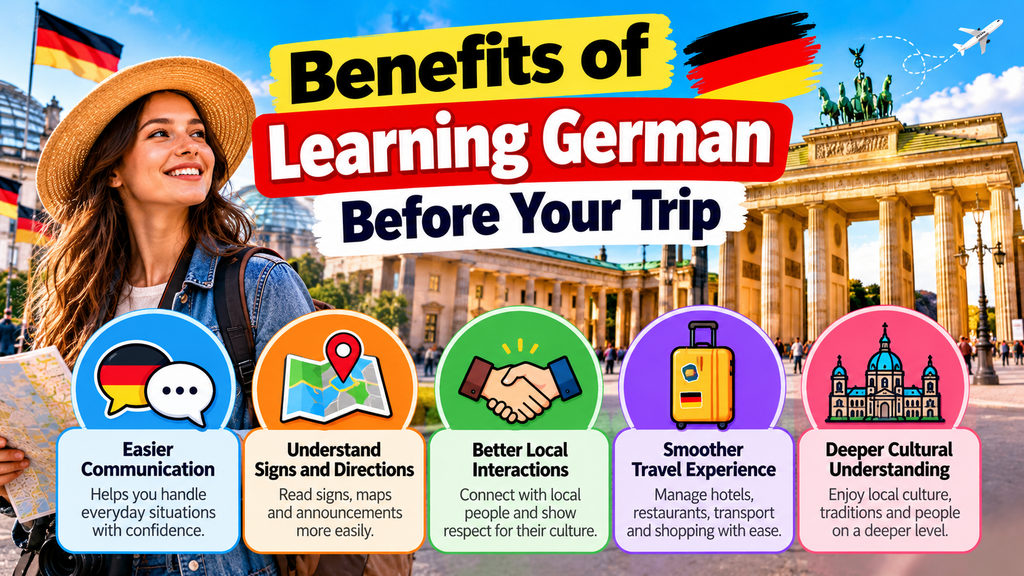
Learning German before your trip can improve more than vocabulary. It can make you more comfortable when reading signs, listening to announcements, interacting with local people, and handling basic travel situations. It may also help you feel more independent because you are not relying on translation tools for every small question.
Germany welcomed a large volume of tourism in 2025. Germany’s Federal Statistical Office reported 497.5 million overnight stays in accommodation establishments during 2025, a new record and 0.3% above 2024. Foreign guests accounted for 83.8 million overnight stays. With so many people traveling through Germany, preparation can help you make your own experience smoother and less stressful.
Common Mistakes Travelers Make With German
One common mistake is trying to learn too much too quickly. German has grammar rules that can take time to understand, and attempting to master everything before a short holiday can become frustrating. A better approach is to identify the language you actually need and practice it repeatedly.
Another mistake is focusing only on reading. Travel involves listening and speaking, so pronunciation and listening practice should have a place in your routine. LinguaTV’s video-based method gives learners exposure to spoken German and provides exercises for listening and other language skills.
A final mistake is being afraid of making errors. You will probably make mistakes. That is normal. The purpose of learning travel German is not to perform a perfect speech; it is to communicate, understand, ask questions, and enjoy interactions.
Is LinguaTV DE Suitable for Beginners?
Yes, LinguaTV has German courses specifically designed for beginners. Its current catalog includes Deutsch für Anfänger 1.1, which is listed as an A1 course and is intended for people starting German for everyday use. The platform also offers additional A1 and A2 content for learners who want to continue building their skills.
Beginners should focus on progress rather than speed. Start with simple phrases, learn how German sounds, practice common vocabulary, and gradually become comfortable producing short sentences. You do not need to wait until your German is perfect before using it.
Tips for Using German Confidently in Germany
Before leaving home, practice saying your most important phrases aloud. Record yourself if that helps, and listen to German conversations regularly. When you arrive in Germany, use German for simple interactions whenever you feel comfortable, even if the conversation eventually continues in English.
Also remember that Germany has many regional dialects and accents. Germany Travel notes that Standard German is understood throughout the country even though different regions have their own dialects and forms of speech. So do not worry if the German you hear sometimes sounds different from what you practiced.
Latest Posts:




Planning Your Germany Trip Beyond Language
German preparation should be one part of your wider travel plan. Research your destinations, accommodation, transport options, opening times, local attractions, payment methods, and travel documents. Germany Travel provides destination information, holiday ideas, accessibility information, and practical travel resources.
Language preparation works best when it follows your actual itinerary. If you are visiting Berlin, learn phrases connected with city travel and museums. If you are exploring Bavaria, add restaurant and countryside vocabulary. If you plan to move between several cities by train, give transportation language more attention. The closer your learning is to your real trip, the more useful it becomes.
Conclusion
Planning a trip to Germany is about more than booking flights and hotels. Preparing a few weeks or months in advance to learn basic German can make everyday travel easier and help you feel more connected to the places you visit. While English is widely spoken, German remains the country’s main language, and knowing basic German can help with signs, conversations, restaurants, transportation, shopping, and other daily situations.
LinguaTV DE is worth considering as part of that preparation because it combines German videos, interactive exercises, vocabulary, grammar, listening, and speaking practice. Its current German courses cover beginner and higher levels, while its travel-oriented approach allows learners to focus on practical communication. You do not need to become fluent before your flight. Start with useful phrases, practice regularly, listen carefully, and build enough confidence to use German when the opportunity appears. Your suitcase carries everything you need for the journey; a little German can help you enjoy the journey itself.