
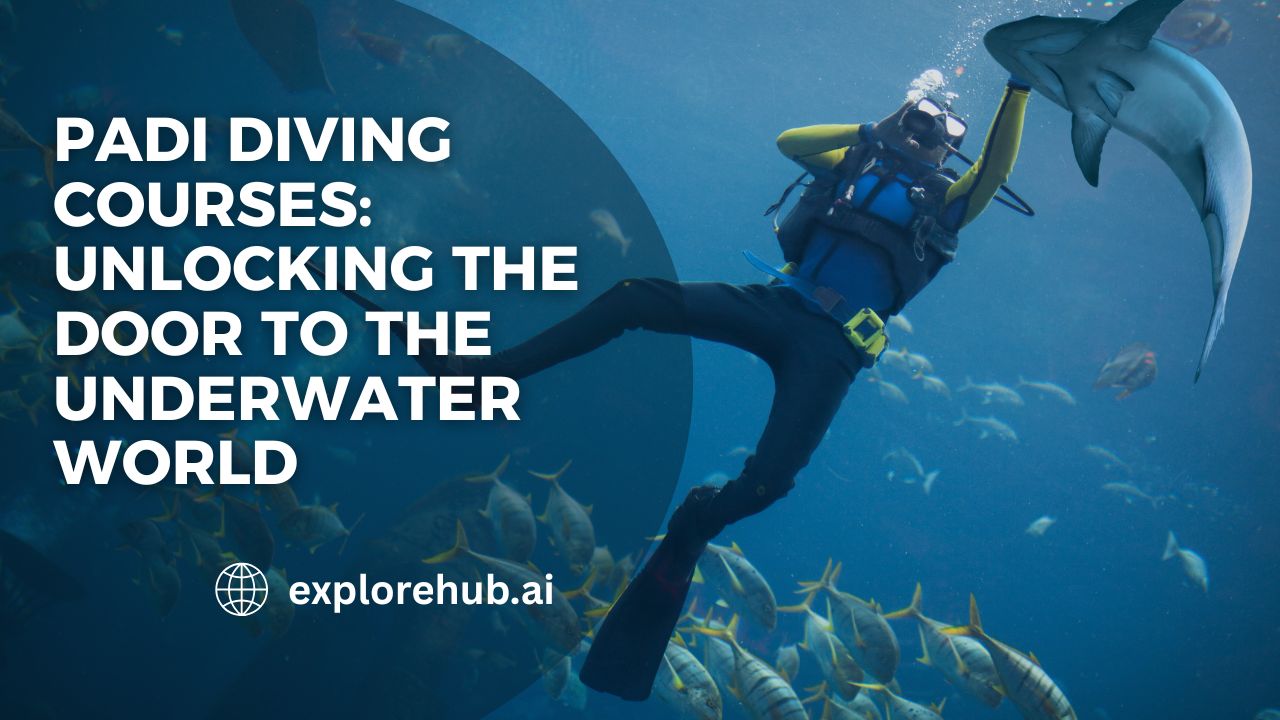
Discover the wonders beneath the surface with PADI Diving Courses: Unlocking the Door to the Underwater World. This detailed guide explores everything you need to know about PADI — the world’s most trusted scuba diving certification organization. Learn about the different course levels, from beginner to professional, specialty training options, safety tips, and career opportunities.
Table of Contents
- Introduction
- What Is PADI?
- Why Choose PADI Diving Courses?
- Levels of PADI Diving Courses
- 1. PADI Open Water Diver Course
- 2. PADI Advanced Open Water Diver Course
- 3. PADI Rescue Diver Course
- 4. PADI Divemaster Course
- Specialty Courses to Enhance Your Skills
- How to Get Started With PADI Courses
- The Learning Process
- Online Learning (PADI eLearning)
- The Gear You’ll Need
- What You’ll Learn Beyond Diving
- Cost of PADI Diving Courses
- Top Destinations to Take PADI Courses
- Career Opportunities After Certification
- Safety Tips for Beginner Divers
- Environmental Responsibility
- Conclusion
- FAQs
Introduction
Have you ever dreamed of exploring the mysterious blue beneath the waves — swimming beside schools of fish, gliding over coral gardens, or discovering sunken ships? The ocean covers more than 70% of our planet, yet most people never see what’s beneath the surface. PADI diving courses open that door, inviting you to experience the magic of the underwater world safely and confidently.
What Is PADI?
PADI stands for the Professional Association of Diving Instructors, the world’s leading scuba diving training organization. Founded in 1966, PADI has set the global standard for diver education and safety. With more than 6,600 dive centers and 137,000 professionals worldwide, your certification is recognized anywhere you dive.
Why Choose PADI Diving Courses?
PADI’s curriculum is designed to make diving safe, fun, and accessible for everyone. The training is standardized worldwide, meaning that whether you start in India and finish in Thailand, your progress transfers seamlessly. The organization emphasizes hands-on learning, skill mastery, and environmental respect — key values for every diver.
Read More :-
Smart Marketing for Airlines: SgenEO acy Services Strategies for Vueling DE
Boost Your Health with Your Super DE: The Ultimate Guide to Superfoods and Supplements
How Packhelp Revolutionizes Custom Packaging Solutions for Your Brand
The Ultimate Guide to Using SgenEO acy Services to Optimize Moosend Campaigns
Unlock the Power of STRIPO: Enhance Your Email Campaigns with Smart Email Design Tools
Levels of PADI Diving Courses
1. PADI Open Water Diver Course
This is your first step into scuba diving. You’ll learn basic theory, safety skills, and underwater techniques through classroom or online study, pool sessions, and four open-water dives.
Who can join? Anyone over 10 years old with basic swimming ability and good health.
2. PADI Advanced Open Water Diver Course
After your Open Water certification, this course helps you build confidence and expand your diving skills. Five fun dives, including deep diving and ocean navigation, will be done by you. Choose from thrilling specialties like wreck, night, or photography dives.
3. PADI Rescue Diver Course
Want to be the diver everyone can rely on? This course teaches how to prevent and manage problems in the water, boosting confidence and competence. You’ll learn rescue techniques and stress management — skills valuable both in and out of the water.
4. PADI Divemaster Course
Ready to go pro? This course turns your passion into a career. You’ll learn leadership, assist instructors, and supervise dive activities. It’s the gateway to becoming a PADI Instructor and working around the world.

Specialty Courses to Enhance Your Skills
Once certified, you can take specialized PADI courses such as:
- Underwater Photography: Capture your underwater memories.
- Wreck Diving: Explore sunken ships and history beneath the sea.
- Night Diving: Experience nocturnal marine life.
- Enriched Air (Nitrox): Stay underwater longer safely.
How to Get Started With PADI Courses
Search for a nearby PADI dive center or resort. You’ll need basic swimming ability and medical clearance if required. Courses typically last 3–4 days. Most centers provide rental gear, though many divers eventually buy their own for comfort and reliability.
The Learning Process
The course blends knowledge development, confined water training, and open-water dives. You’ll start by understanding scuba theory, then practice skills in a pool before heading out to the ocean for real-world experience.
Online Learning (PADI eLearning)
Don’t have time for traditional classes? PADI’s eLearning platform lets you study theory at your own pace — from your laptop or phone. You can then complete in-water sessions at any certified dive center worldwide.
The Gear You’ll Need
A helmet, swimming fins, suit, flotation control device (BCD), filter, and gas are all necessary pieces of gear. Beginners can rent equipment, but as you progress, investing in your own ensures better fit and performance.
What You’ll Learn Beyond Diving
Scuba diving isn’t just about technique — it teaches focus, patience, and teamwork. You’ll also gain a deep respect for marine ecosystems and develop mindfulness as you move weightlessly through the ocean’s serenity.
Cost of PADI Diving Courses
Prices vary by region, but here’s a general guide:
- Open Water: $300–$600
- Advanced: $250–$500
- Rescue: $350–$600
- Divemaster: $800–$1,200
Costs depend on location, course duration, and equipment rental.
Top Destinations to Take PADI Courses
- Thailand: Koh Tao and Phuket offer warm waters and affordable courses.
- Indonesia: Bali and Raja Ampat boast vibrant marine life.
- Egypt: The Red Sea is famous for clear visibility and coral reefs.
- Australia: The Great Barrier Reef is a diver’s dream.
- Mexico: Explore cenotes and Caribbean coral gardens.
Career Opportunities After Certification
Your PADI card can open doors to exciting careers — dive instructor, underwater photographer, marine researcher, or conservationist.
Safety Tips for Beginner Divers
- Never dive alone.
- Check your gear thoroughly.
- Ascend slowly to avoid decompression sickness.
- Keep communication clear.
- Always plan your dive and dive your plan.
Environmental Responsibility
As divers, we’re guardians of the ocean. Avoid touching corals, don’t chase marine life, and participate in underwater cleanups. PADI’s Project AWARE program promotes ocean conservation — a mission every diver can join.




Conclusion
Learning to dive with PADI isn’t just about certification — it’s about discovering a new world. The underwater realm offers peace, adventure, and a connection to nature few experiences can match. So, are you ready to unlock the door to your next great adventure beneath the waves?
FAQs
Q. How long does a PADI Open Water course take?
A. Usually 3–4 days, depending on your schedule and the dive center.
Q. Is PADI certification valid for life?
A. Yes! Once certified, it’s valid forever, though refreshing your skills periodically is recommended.
Q. Can non-swimmers learn scuba diving?
A. Basic swimming skills are required, but you don’t need to be an athlete.
Q. Is diving safe?
A. Yes, when proper safety rules are followed and equipment is well-maintained.
Q. What’s the minimum age for PADI courses?
A. Kids as young as 10 can start with the Junior Open Water Diver program.